Does a Root Canal Hurt?
Modern root canal treatment is done under full local anaesthetic and is usually no more uncomfortable than a filling. The pain people fear is the infection, not the treatment.

Dr. Kyle Lesko

The quick version
Start with the practical filters: location, hours, coverage, and whether they take new patients.
Ask how the clinic handles emergencies, because that is when it matters most.
A clinic that explains options and gives written estimates is telling you how it operates.
Fit for your household matters as much as any credential, especially with children or anxiety.
Choosing a dental office is less about finding the single correct answer and more about finding the right fit for your household. The practical filters come first, whether the clinic is reachable, whether the hours work, whether your coverage is accepted, and whether they are taking new patients at all. After that it comes down to how a practice communicates and how it handles the moments that are not routine. This checklist is written to be used with any clinic in Leduc, including this one.
Start with the practical filters
These rule options in or out quickly and save you researching a clinic you were never going to be able to use.
Location relative to home, work, or your children's school, since a convenient clinic is one you actually attend.
Hours, particularly whether there is any availability outside standard working hours.
Whether they accept your coverage, and whether they offer direct billing rather than pay and claim.
Whether they are accepting new patients, and whether that includes patients covered by the Canadian Dental Care Plan.
Whether the range of services covers what your household is likely to need, so routine work does not mean repeated referrals.
Ask how emergencies are handled
This is the question most people forget and the one they later wish they had asked. A broken tooth or an abscess does not schedule itself politely.
Ask directly what happens if you call in pain on a weekday morning. Does the clinic hold time for urgent problems, roughly how quickly do existing patients get seen, and what are you told to do outside opening hours. The specific answer matters less than whether there is a clear one. A practice that has thought about it will tell you plainly.
Listen to how treatment gets explained
At a first visit you learn a great deal about how a clinic operates simply from how findings are described to you.
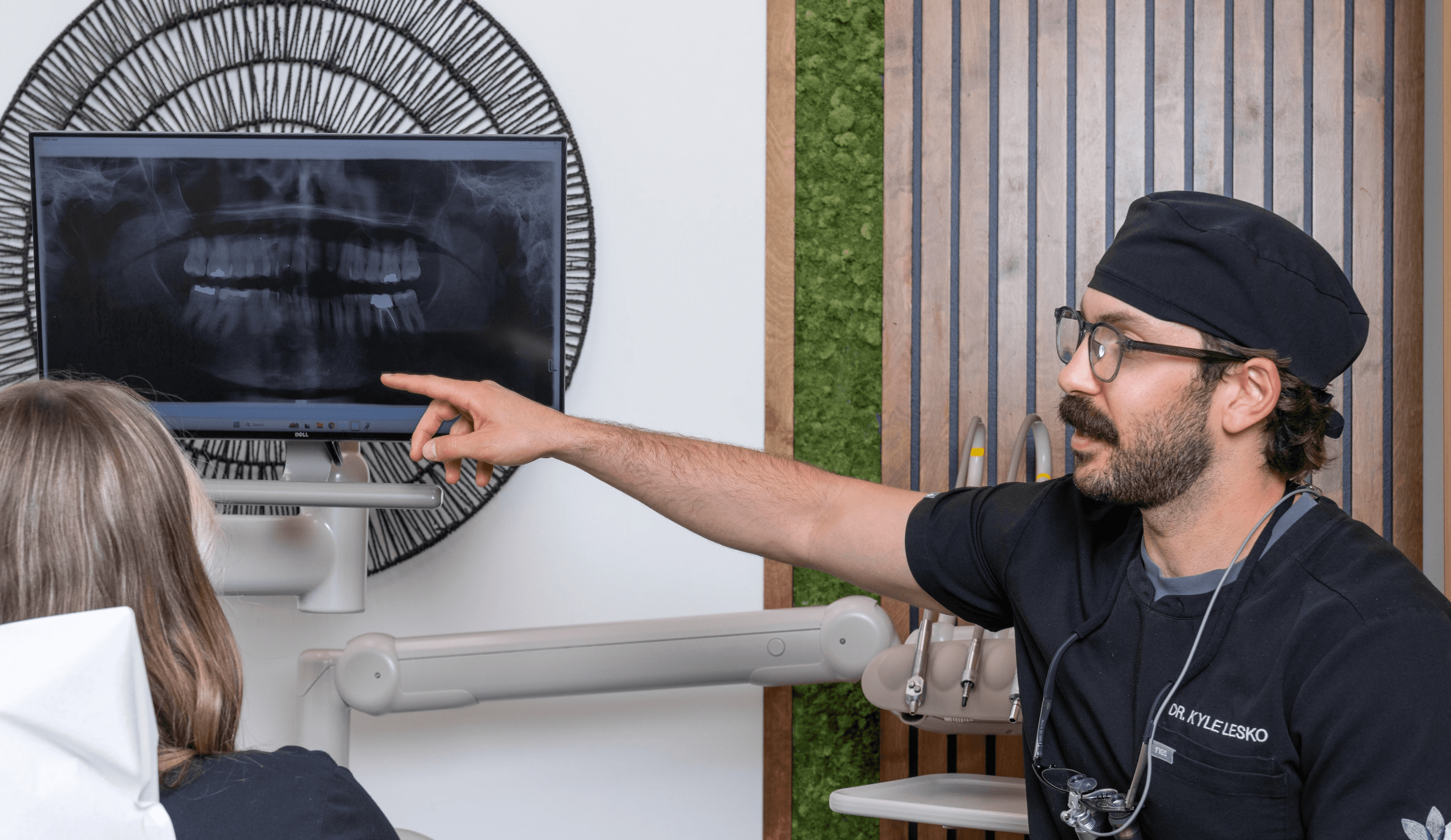
Good signs are concrete. You are shown what is being talked about, on an x ray or a photograph, rather than just told. Options are explained including the option of monitoring something rather than treating it immediately. Urgency is separated from importance, so you know what genuinely needs doing now and what can be planned. You get a written estimate before agreeing to anything, and there is no discomfort about you taking it home to think about.
The reverse is also informative. Pressure to decide immediately, an unwillingness to put numbers in writing, or a long treatment plan presented before an examination has really been completed are all worth pausing on.
Coverage questions worth asking up front
Ask these on the phone before booking. They take a minute and they prevent the most common source of frustration later.
Do you offer direct billing to my plan, or do I pay and submit the claim myself?
Are you accepting patients covered by the Canadian Dental Care Plan?
Will I get a written estimate before treatment starts?
If a service needs preauthorization, do you handle that submission?
Fit for the people in your household
A clinic that is right for one adult is not automatically right for a family. If you have young children, ask how the practice approaches a first visit and whether it is comfortable simply letting a nervous child sit in the chair and look around without treatment on the first appointment.
If anyone in the household is anxious about dental treatment, ask how that is handled. The answer should include more than medication. Agreed stop signals, explaining before doing, shorter appointments, and morning slots all matter, and a practice that mentions those has clearly dealt with anxious patients thoughtfully.

Reading reviews usefully
Reviews are worth reading, but the star average is the least informative part of them. Patterns are what carry information.
Look for repeated specifics rather than general praise or general complaint. Comments describing how a clinic responded when something went wrong tell you more than comments describing a routine cleaning that went fine. A handful of critical reviews among many positive ones is normal for any practice that sees a lot of people, and how the clinic responded to them is often the most revealing thing on the page.
About TLC, so you can apply the list
For transparency, here is where this practice sits against the checklist above. TLC Family Dental Centre is in Leduc, is open late on Mondays and Tuesdays, offers direct billing, and is accepting new patients including those covered by the Canadian Dental Care Plan.
Dr. Kyle Lesko holds a BSc and a DDS from the University of Alberta, took ownership of TLC in 2025, and is a member of the Alberta Dental Association and College and the Canadian Dental Association. He performs root canal treatment and extractions in house and is an Invisalign provider. Written estimates are provided after an exam, before treatment is agreed.
Common questions
How do I know if a clinic is accepting new patients?
Phone and ask directly, since online listings go out of date. Mention any coverage you hold at the same time, because participation in plans such as CDCP is a separate question from whether the office has capacity.
Should I choose a clinic close to home or close to work?
Whichever you will realistically attend. The practical test is whether you can get there for a checkup without rearranging your day, because the clinic you keep going back to is worth more than the one that looked ideal on paper.
What should I bring to a first appointment?
Identification, your coverage details or CDCP member number, a list of current medications, and the name of any previous dental office so records can be requested if that is helpful.
Is it a problem if I have not been to a dentist in years?
No, and it is more common than most people assume. A first visit in that situation is about understanding the whole picture and setting sensible priorities rather than fixing everything at once.
Can I switch dental offices?
Yes, at any time and without explanation. Your records can be requested from your previous office, and there is no obligation to stay anywhere that does not suit you.
If you are looking for a dental home in Leduc and want to see whether this practice is a good fit, we are glad to answer the questions above on the phone before you commit to anything. TLC Family Dental Centre is accepting new patients, including those covered by the Canadian Dental Care Plan. Book online or call us at 780.980.5115.
About
Featured Posts




Explore Topics