Hockey and Sports Mouthguards in Alberta: What Is Required
As of October 2026, Hockey Canada says a mouth guard is compulsory in divisions that allow the half visor, while Hockey Alberta's Regulations let a local minor hockey association be more restrictive than Hockey Alberta, so whether your child needs a hockey mouthguard depends on the division and the association.

Dr. Kyle Lesko

The quick version
As of October 2026, Hockey Canada says a mouth guard is compulsory in divisions that allow the half visor, and its interpretation says mouth guards are "not currently mandatory under the rules" unless a provincial branch has made them mandatory for a division.
We did not find a mouth guard rule in the Hockey Alberta regulations we read, and the Leduc Minor Hockey Association registration page does not list a mouth guard as mandatory equipment (checked October 2026). Ask your association.
The Canadian Dental Association says to talk to your dentist about a mouthguard if your child plays sports, and its position statement says mouth guards have "a very limited role in preventing brain concussion."
For a knocked-out tooth, the International Association of Dental Traumatology (international) says to go to the dentist immediately.
As of October 2026, Hockey Canada says a mouth guard is compulsory in divisions that allow the half visor, while Hockey Alberta's Regulations let a local minor hockey association be more restrictive than Hockey Alberta, so whether your child needs a hockey mouthguard depends on the division and the association.
Dr. Kyle Lesko leads TLC Family Dental Centre, a family practice that welcomes children of every age from Leduc and the greater Edmonton area. This is general information, not a diagnosis.
Do kids need a mouthguard for hockey in Alberta?
It depends on your child's division and association, and we could not confirm one rule for every player. As of October 2026, Hockey Canada's rulebook makes a mouth guard compulsory in divisions that allow the half visor. We did not find a mouth guard rule in the Hockey Alberta regulations we read in October 2026.
Who | What the rule says | Source and date checked |
|---|---|---|
Hockey Canada | Note 6: "For divisions of hockey that allow the wearing of the half visor, the wearing of a mouth guard is compulsory (recommended but optional for Senior hockey)." Interpretation 2: "...if a Member has made mouth guards mandatory at a specific division of play. Otherwise, mouth guards are not currently mandatory under the rules." | Hockey Canada Playing Rules 2026 to 2028, Rule 3.6, Note 6 (printed page 29) and Interpretation 2 (printed page 30). Checked October 2026. |
Hockey Alberta | We did not find a mouth guard rule in its Regulations, Minor Hockey and Intro to Hockey sections or policy list. Its Regulations say a local association's bylaws and regulations "may be more restrictive, but not less restrictive" than its own. Ask your association. | Hockey Alberta documents: Regulations (as amended to May 2026), Minor Hockey 2026 to 27, policies tab. Checked October 2026. |
Leduc Minor Hockey Association | Its registration page lists "mandatory equipment for all minor hockey players," and a mouth guard is not on that list. That is silence, not a statement either way. Ask the association or your team manager. | Registration page (2026 to 2027). Checked October 2026. |
Canadian Dental Association | Advice, not a rule. It "highly recommends" appropriate face and head protection for contact sports, says to talk to your dentist about a mouthguard if your child plays sports, and prefers a custom fitted one. | Position statement (February 2019) and Dental Safety page. Checked October 2026. |
Other sports: ask your sport's association | Other sports have their own rules. | Checked October 2026: other sports' rules were not reviewed. |
Sources: Hockey Canada, Hockey Alberta, Leduc Minor Hockey Association and Canadian Dental Association pages, checked October 2026.
Hockey Canada's two statements read differently, so we quote each one separately. Hockey Alberta tells families to "Contact your MHA for all the information you need to register." In Leduc, that is the Leduc Minor Hockey Association. Ask your league or association what applies to your child's division.
What is the difference between stock, boil-and-bite and custom mouthguards?
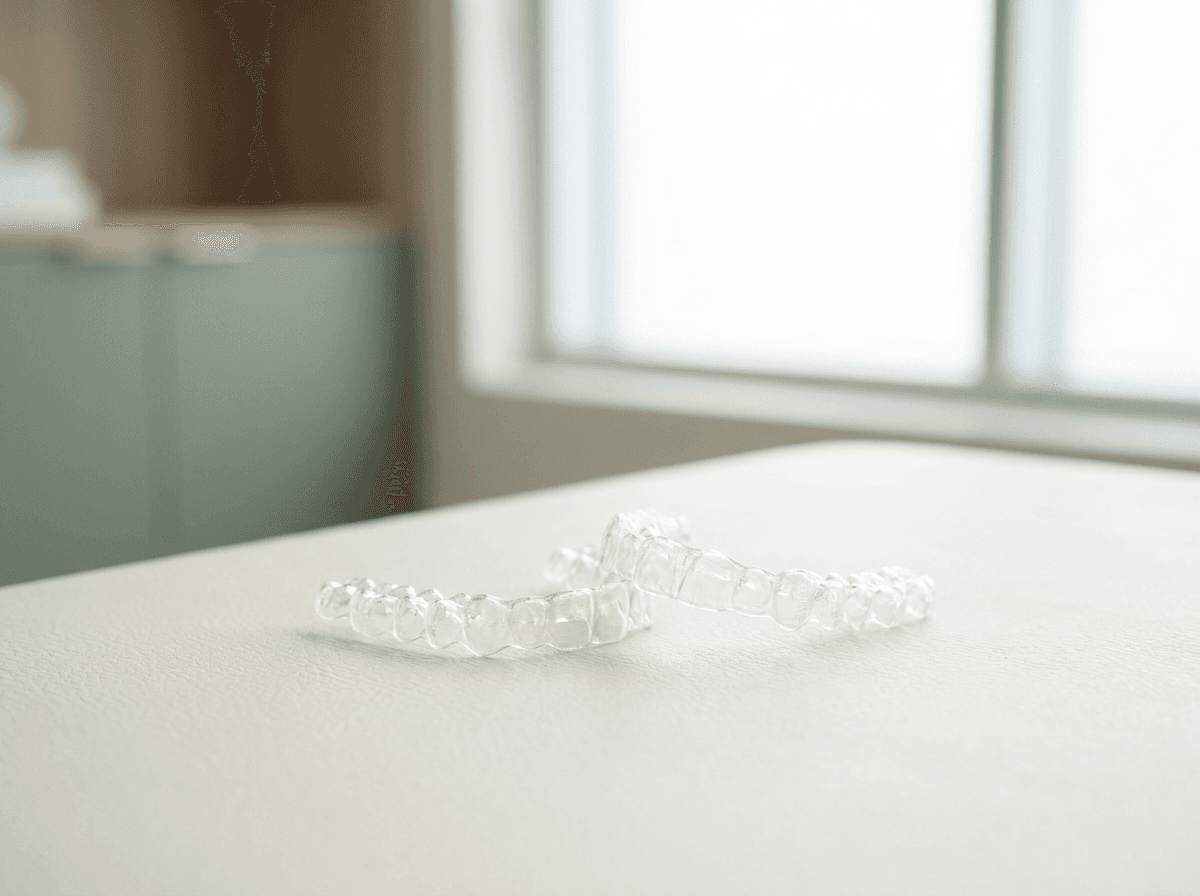
The Canadian Dental Association (CDA) names three main types of mouthguard and says your dentist can help you choose. Stock ones are pre-formed, boil-and-bite ones are softened in hot water to fit your mouth better, and custom-fitted ones are made by your dentist.
The CDA adds:
Stock: "can feel bulky and can make breathing and talking harder."
Custom-fitted: "ideal for competitive athletes or children in regular sports."
The International Association of Dental Traumatology (IADT, international) says stock guards have "no adaptation to the teeth" and are "a poor fit," and that boil-and-bite guards "distort and wear over time and need to be checked regularly to ensure adequate protection."
Is a custom mouthguard worth asking about?
Yes, ask your dentist about custom mouthguards. The Canadian Dental Association's position statement says a properly fitted mouth guard, "preferably custom fitted by a dentist," decreases the risk of orofacial (mouth and face) injuries because it is more comfortable and so more likely to be positioned properly at impact.
Does a mouthguard prevent concussion?
The Canadian Dental Association says "Other face and head protection is essential because mouth guards have a very limited role in preventing brain concussion." Hockey Alberta says no study has yet to show that any equipment, including helmets and mouth guards, prevents a concussion, but that helmets and mouth guards "provide protection against localized injuries such as skull fractures and dental/oral damage."
A 2020 University of Calgary study in youth ice hockey found that mouthguard use was associated with lower odds of concussion. It was observational, so it shows an association, not proof, and its custom-fit result was not statistically significant, so it does not show that custom guards are better or worse for concussion.
What if your child has braces?
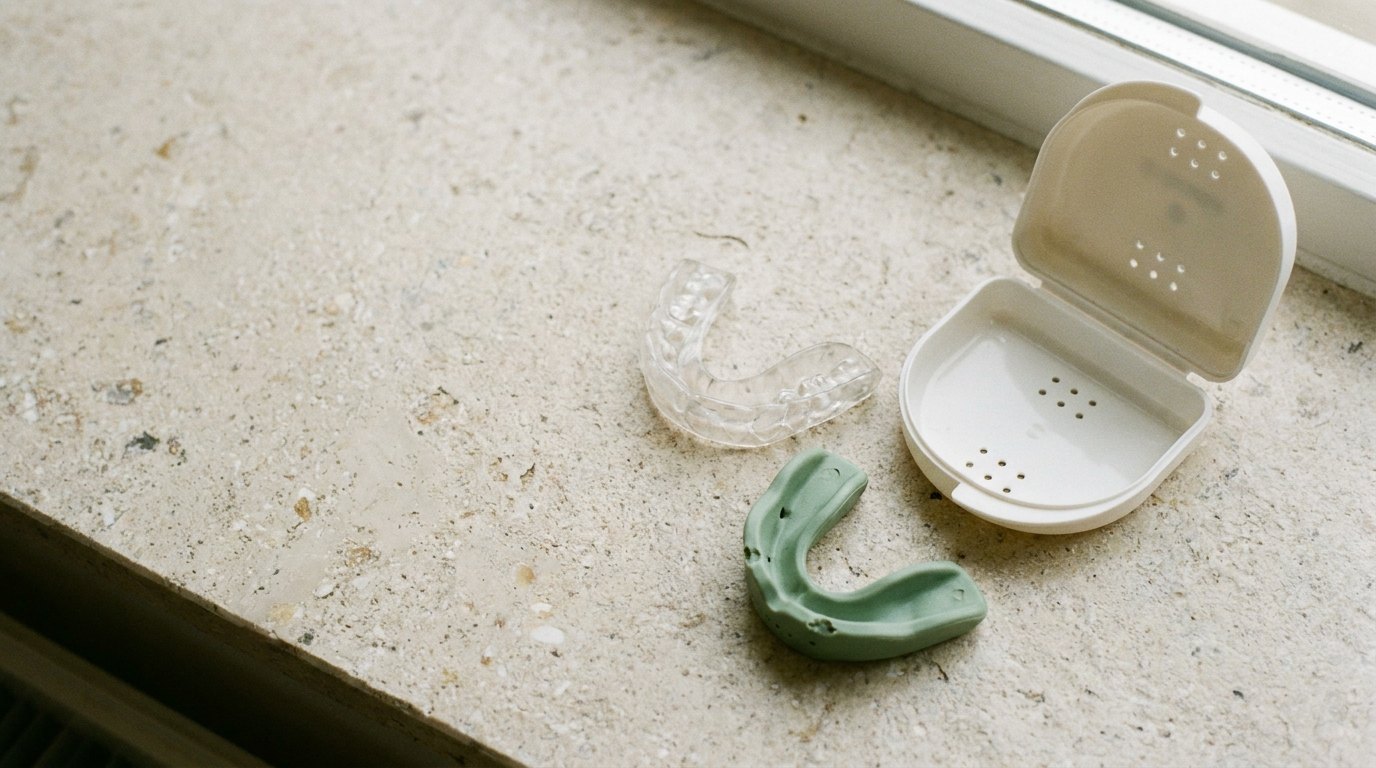
The Canadian Dental Association recommends that patients having orthodontic treatment, such as braces, get a custom fit mouthguard "to accommodate the process." That is the one Canadian braces statement we found (February 2019). Ask your dentist about custom mouthguards if your child wears braces.
The American Dental Association (US) says a properly fitted mouthguard "may be especially important for people who wear braces," because "a blow to the face could damage the brackets or other fixed orthodontic appliances." It suggests talking to your dentist or orthodontist about selecting one.
How often should a mouthguard be replaced?
The Canadian Dental Association says "it is important to verify the fit of the mouthguard frequently and to get a new one when a child outgrows the current one." It gives no fixed replacement interval, and we did not find a Canadian source that does.
The American Dental Association (US) says to replace a mouthguard "immediately if it shows sign of wear, is damaged or ill fitting," and that "Teens and children may need to replace their mouthguards more often because their mouths are still growing and changing."
What should you do if a tooth is knocked out or chipped in a game?
See a dentist as soon as possible. The International Association of Dental Traumatology (IADT, international) says to go to the dentist immediately after a knocked-out tooth. We did not find step-by-step instructions on the Canadian Dental Association's public pages, so the steps below come from IADT and the American Dental Association (US).
If a permanent tooth is knocked out
IADT (international) says the chance of saving a knocked-out permanent tooth is greatest within the first 20 minutes of the accident, and its steps include:
Find the tooth and hold it by the crown. Do not touch the root.
Rinse it briefly in water and place it back in its original position right away, despite the bleeding.
If it cannot go back right away, keep it moist in milk or saliva, and do not let it dry out.
Go to the dentist immediately.
The American Dental Association (US) agrees: keep the tooth moist and get to the dentist right away. IADT says these steps are for permanent teeth, and that a baby tooth should never be placed back in the mouth. Read what to do for a knocked-out tooth for more.
If a tooth is chipped or broken
IADT (international) says to try to find the broken piece, store it in water or milk and not let it dry, and visit your dentist as soon as possible. The American Dental Association (US) says to rinse your mouth with warm water for a cracked tooth. Read what to do for a chipped or broken tooth.
Frequently Asked Questions
Do soccer, football or rugby players need a mouthguard?
Other sports have their own rules, and we did not review them, so ask your sport's association. The Canadian Dental Association names baseball, hockey, soccer, football, rugby and basketball as sports with increased risk of facial trauma. That is dental advice, not a sport's rule.
How do I clean and store a mouthguard?
The American Dental Association (US) says to rinse the mouthguard before and after each use, store it in a sturdy container with vents so it can dry, and keep it out of the sun and hot water. We did not find a Canadian care page.
Who should I ask about a custom mouthguard?
Ask your dentist. The Canadian Dental Association says custom-fitted mouthguards are made by your dentist, and it tells parents of children who play sports to talk to their dentist about a mouth protector or mouthguard. Your child's next checkup is a natural time to ask.
What if my young child has a loose or chipped tooth?
The Canadian Dental Association says young kids fall frequently and to see your dentist if you notice a loose, chipped or missing tooth. If a tooth has been knocked out, the International Association of Dental Traumatology (international) says a baby tooth should not be put back in the mouth.
Talk it through with Dr. Kyle Lesko in Leduc
Book online or call TLC Family Dental Centre at 780.980.5115. You will find us at 5209 Discovery Way #4 in Leduc, and we welcome patients from Leduc and the greater Edmonton area. Most children do well with a checkup and cleaning about every six months, and Dr. Lesko recommends what suits each child after the exam. See children's dentistry in Leduc.
Sources
Checked in October 2026. Rules and recommendations change, so confirm current details with the organisations below.
Hockey Canada Playing Rules 2026 to 2028, Hockey Canada
Documents library, Hockey Alberta
Regulations (as amended to May 2026), Hockey Alberta
Minor Hockey, Hockey Alberta
Concussions, Hockey Alberta
Registration, Leduc Minor Hockey Association
CDA Position on Prevention of Traumatic Oral / Maxillofacial Injuries, Canadian Dental Association
Dental Safety, Canadian Dental Association
Mouthguards, American Dental Association (US)
Dental Emergencies, American Dental Association (US)
Stock Mouthguards, International Association of Dental Traumatology (international)
Mouth Formed Boil and Bite mouthguard, IADT (international)
Knocked out, IADT (international)
Broken Teeth, IADT (international)
Mouthguards do more than just protecting teeth in youth ice hockey, University of Calgary
About
Featured Posts


Explore Topics