
How Long Does a Dental Crown Take, Start to Finish?
Most crowns are finished across two appointments spaced two to three weeks apart. The first visit prepares the tooth, the lab builds the crown, and the second visit fits it.

Dr. Kyle Lesko

The quick version
Most dental crowns take two appointments spread over two to three weeks.
The first appointment prepares the tooth and takes an impression or a digital scan.
The waiting time in between is the dental lab building your crown by hand.
A temporary crown protects the tooth so you can eat and speak normally while you wait.
A dental crown normally takes two appointments across two to three weeks. The first visit shapes the tooth and captures the impression, an outside dental laboratory then builds the crown, and a second short visit fits and cements it. Most of the calendar time is not chair time, it is the lab doing careful work. At TLC Family Dental Centre in Leduc, Dr. Kyle Lesko walks patients through the sequence before treatment starts so nobody is guessing about how long they will be wearing a temporary.
What happens at the first appointment
The first visit is the longer of the two, usually somewhere between an hour and ninety minutes depending on the tooth. The area is frozen, any decay or old filling material is cleared away, and the tooth is shaped so the crown has something solid to sit on. If the tooth has broken down significantly, a build up may be placed first to rebuild enough structure to support the crown.
Once the tooth is prepared, an impression or digital scan captures its exact shape along with the bite relationship to the teeth above and below. That record is what allows the laboratory to build a crown that meets your opposing teeth correctly. A temporary crown is then made and cemented in place with a soft cement designed to come off easily at the next visit.
Why there is a wait in between
The gap between appointments is the laboratory building your crown. A technician works from the impression to fabricate a restoration matched to the shape, shade, and bite of your own teeth. Depending on the material and the lab schedule, that is commonly two to three weeks.
It is worth understanding what you are waiting for. A crown that is a fraction of a millimetre high will feel wrong every time you close your teeth together, and one shaded slightly off will stand out on a front tooth. The lab time is what prevents both of those outcomes.
What happens at the fitting appointment
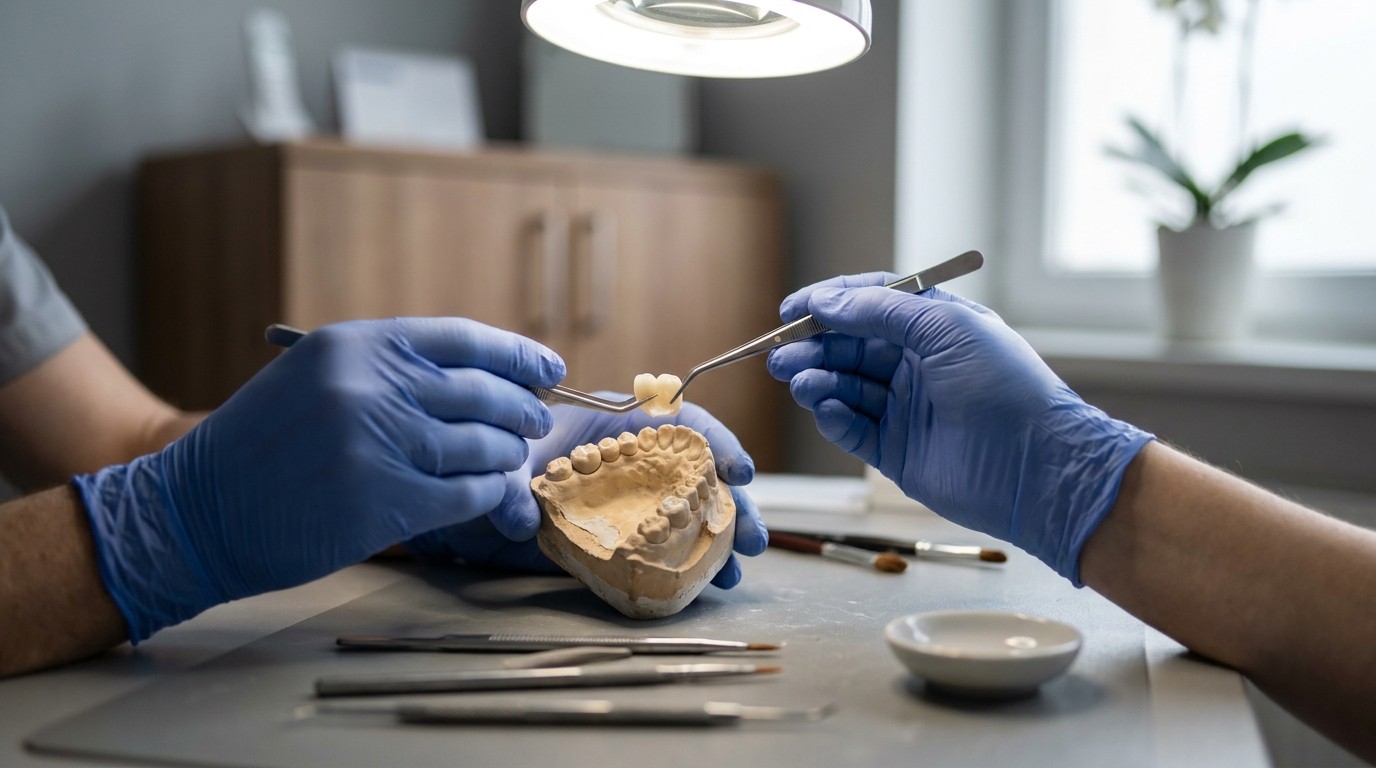
The second visit is usually much shorter, often around thirty minutes. The temporary comes off, the new crown is tried in, and the fit is checked at the margins where the crown meets the tooth, at the contacts with the neighbouring teeth, and against your bite.
You will be asked to tap and grind gently so any high spots can be adjusted before the crown is cemented for good. This part matters more than it might seem. A crown left slightly high can cause soreness and, over time, put strain on the tooth underneath.
Margins are checked so the crown seals against the tooth with no ledge for plaque to collect.
Contacts are checked so floss passes between the teeth with slight resistance, not too tight and not loose.
The bite is adjusted so the crown meets the opposing tooth at the same time as everything else.
What can make the timeline longer
Several situations extend the process, and knowing about them in advance takes the surprise out of it.
A tooth that needs root canal treatment first will add appointments before crown work begins. Dr. Lesko performs root canal treatment in house at TLC, so this does not usually mean a referral elsewhere.
A tooth that has fractured below the gum line may need the gum tissue reshaped and given time to settle before an accurate impression can be taken.
Front teeth sometimes need a shade appointment or a try in stage, because matching a single tooth to its neighbour is more demanding than matching a molar.
Holiday closures at the laboratory can add a week, which is worth asking about if you are timing treatment around a trip or an event.

Living with a temporary crown
A temporary crown is doing a real job. It protects the prepared tooth from temperature and pressure, keeps the neighbouring teeth from drifting into the space, and holds your gum tissue in the right shape so the final crown seats properly.
It is deliberately cemented with a softer material so it can be removed without damaging the tooth underneath, which also means it can come loose. Sticky foods such as toffee and chewing gum are the usual culprits, and flossing straight up and out rather than pulling through helps it stay put. If a temporary does come off, keep it and call the office. It is a quick fix, but leaving the tooth uncovered for days is not a good idea.
Booking around your own schedule
If the timing matters, say so when you book. Patients in Leduc and the surrounding communities often plan crown treatment around work rotations, travel, or a family event, and the two appointment structure is usually flexible enough to accommodate that when we know about it early.
TLC Family Dental Centre is open late on Mondays and Tuesdays, which helps when a mid week appointment is difficult to arrange around work.
Common questions
Can a dental crown be done in one day?
Some practices offer same day milled crowns. At TLC the crown is built by a dental laboratory, which takes longer but allows a technician to control the shade and shape by hand. For a front tooth in particular, that additional control is often worth the extra visit.
How long does the first crown appointment take?
Usually between an hour and ninety minutes, depending on the tooth and whether a build up is needed. The fitting appointment afterwards is much shorter, commonly around thirty minutes.
Does getting a crown hurt?
The tooth is frozen for the preparation appointment, so you should not feel pain during treatment. Some tenderness in the gum for a day or two afterwards is normal. Oral sedation is available at TLC if dental treatment makes you anxious.
What if my temporary crown falls off?
Keep the temporary, avoid chewing on that side, and call the office. Recementing a temporary is quick. Leaving the prepared tooth exposed can make it sensitive and can allow the neighbouring teeth to shift.
How long will the finished crown last?
With good brushing, flossing, and regular checkups, a well fitted crown lasts many years. The tooth underneath still needs care, because decay can start at the margin where the crown meets the tooth.
If you have been told you need a crown and want to understand the timeline before you commit, the team at TLC Family Dental Centre in Leduc is happy to talk it through. Dr. Kyle Lesko will examine the tooth, explain what is involved in plain language, and provide a clear written estimate after your exam. Book online or call us at 780.980.5115.
About
Featured Posts




Explore Topics