When Your Child Has a Dental Emergency in Leduc
A knocked out baby tooth and a knocked out adult tooth need opposite responses, and getting that wrong matters. Here is how to tell what is urgent when your child hurts, and what to do first.

Dr. Kyle Lesko

The quick version
A knocked out adult tooth is one of the few true dental emergencies. Put it in milk and call us straight away.
A knocked out baby tooth is the opposite. Do not try to put it back, because doing so can damage the adult tooth forming above it.
Facial swelling with a fever needs attention the same day, not the next appointment.
A chipped tooth with no pain can usually wait for a normal appointment, though it is worth having looked at.
Children take their cue from the adult in the room, so how calm you sound matters more than what you say.
Is your child's tooth pain an emergency
Children are not small adults when it comes to teeth, and the same injury can mean very different things depending on their age and which tooth is involved.
Call us the same day if there is swelling in the face or gum, particularly with a fever or if your child seems unwell in themselves. Call the same day for an adult tooth that has been knocked out or pushed badly out of position, for pain that is stopping them sleeping or eating, or for a tooth broken deeply enough that you can see pink or red in the middle of it. Bleeding after an injury that has not settled with ten minutes of gentle pressure also needs a call.
Some things can wait for an ordinary appointment. A small chip with no pain. A baby tooth that is loose because it is genuinely ready to come out. Mild sensitivity that passes quickly. A tooth that aches occasionally but responds to a normal dose of children's painkiller.
If you are unsure, phone and describe it. Sorting urgent from routine over the phone is straightforward for us and it saves you a difficult evening of wondering.
Knocked out baby tooth versus adult tooth
This is the one thing in this article most worth remembering, because the correct response is opposite depending on which tooth it is, and the instinct most parents have is right for one and harmful for the other.
An adult tooth that has been knocked out is genuinely time critical. Pick it up by the crown, the part you normally see, and not by the root. If it is dirty, rinse it briefly in milk or saline. Do not scrub it and do not use soap, because the delicate cells on the root surface are what allow it to reattach.
If you feel able, put it straight back into the socket the right way round and have your child bite gently on a clean cloth to hold it. If you cannot, put it in a cup of milk. Milk is far better than water, and better than nothing at all. Then call us immediately. The chances of saving the tooth fall with every ten minutes that passes, so this is a call you make on the way rather than after you have settled everyone down.
A baby tooth that has been knocked out is different, and the rule is do not put it back. Pushing a baby tooth back into the socket can damage the developing adult tooth sitting in the bone above it, and that damage can affect how the permanent tooth forms and comes through years later. Control the bleeding with gentle pressure on a clean cloth, keep your child calm, and call us so we can check the area. Bring the tooth if you have it, so we can confirm it came out whole.
How to tell which one it is
Age is the usual guide. Children generally start losing baby teeth around six and finish around twelve, so a tooth lost before six is almost certainly a baby tooth and one lost in the early teens is almost certainly adult. Baby teeth are smaller, whiter, and have shorter roots. If you genuinely cannot tell, treat it as an adult tooth, put it in milk, and call. We would far rather see a baby tooth in a cup of milk than hear that an adult tooth was left on the floor.
Chipped or broken tooth in a child
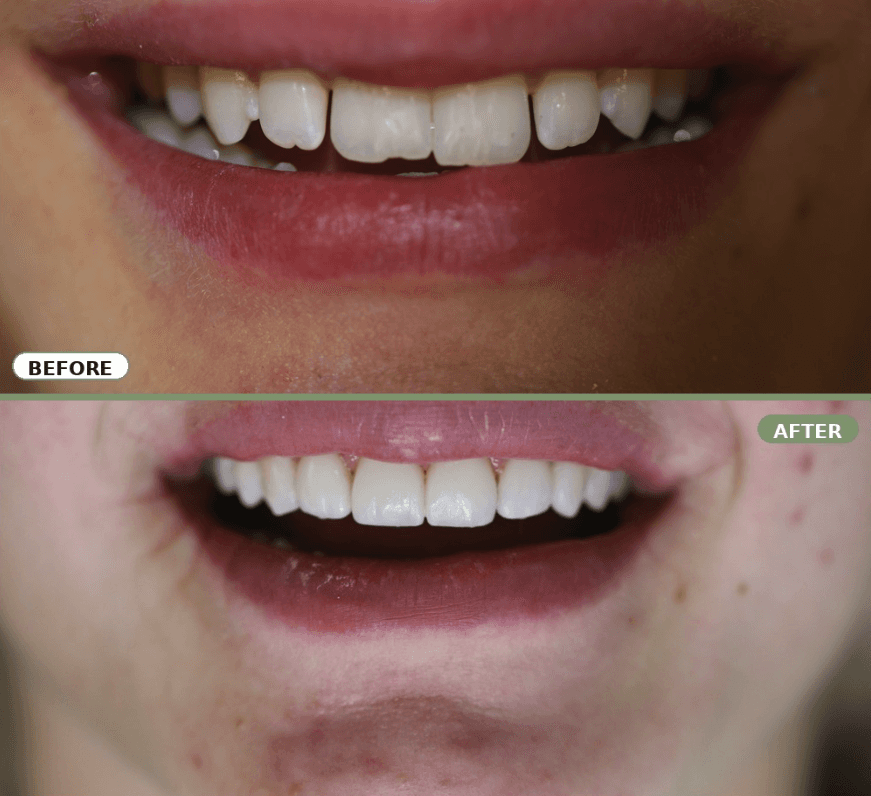
Chips are the most common dental injury in children, and most of them are less serious than they look to a worried parent.
A small chip in the enamel, with no pain and no sensitivity, is not urgent. It is worth having looked at so we can check nothing has been damaged underneath, but it can wait for a normal appointment.
A larger break, especially one where your child reacts to air or cold, means the layer under the enamel is exposed. That is uncomfortable and it should be seen promptly, though it is not a middle of the night situation.
A break deep enough that you can see pink or red in the centre of the tooth has reached the nerve. That needs same day attention. Cover the tooth with something soft if you have it, keep your child away from hot and cold, and call us.
In every case, find the fragment if you can and bring it in a little milk. Broken pieces can sometimes be bonded back on, and the result is better than a rebuild. Our guide to what to do about a chipped or broken tooth covers this in more detail.
Swelling, fever, or a bump on the gum
Of everything in this article, this is the one parents most often underestimate, because there may be no dramatic injury and the child may not even be complaining much.
A small pimple or bump on the gum above a tooth is usually a sign of infection draining. It often does not hurt, which is exactly why it gets left. It will not resolve by itself and it needs to be seen.
Swelling in the face or jaw is more urgent, particularly with a fever or if your child is unusually tired or off their food. Infection in a child can move faster than in an adult, and that is worth taking seriously rather than waiting to see how the weekend goes.
If swelling is spreading toward the eye, or your child has any difficulty swallowing or breathing, that is an emergency department rather than a dental appointment. Do not wait for us to open.
One thing to avoid in the meantime is heat. A warm compress on a swollen face feels soothing and can encourage infection to spread. Cold on the outside of the cheek is the safer choice. Our article on tooth abscess symptoms explains what to watch for.
How to keep your child calm on the way in
Children read the adults around them very accurately, and a parent who is frightened produces a frightened child faster than any injury does.
Keep your voice level even if you are not feeling it. Deal with the practical steps in front of you rather than talking about what might happen next. It genuinely helps to give a small job to do, like holding the cloth or carrying the cup, because having a task is steadying at any age.
Be careful with reassurance you cannot back up. Promising it will not hurt is a promise that can be broken in the first thirty seconds of an appointment, and that costs you their trust for every visit afterward. Something honest works better. We are going to see Dr. Lesko, he will look at your tooth and tell us what to do, and I will be with you.
Avoid the words that carry weight from your own childhood. Children have no fear of a dental office until somebody hands it to them, and words like needle, drill, and hurt do that job efficiently.
What to expect at the visit
The first thing we do is find out what has happened and whether your child is comfortable, not start treatment.
Dr. Lesko will look at the tooth and the surrounding area, and will usually take an x-ray if there has been an injury, because a good deal of what matters is below the gum where it cannot be seen. A knock can affect the root or the developing adult tooth without much showing on the surface.
What follows depends on what we find. Sometimes it is treatment there and then. Often, particularly after a knock, it is making the tooth comfortable and arranging to see your child again in a few weeks, because an injured tooth reveals how it is settling over time rather than immediately. That follow up matters and it is worth keeping.
We see a lot of children here, including nervous ones, and going at a pace that works for them is a normal part of the appointment rather than a special arrangement. If your child has had a difficult experience somewhere before, tell us when you arrive so we know where we are starting from.
Frequently Asked Questions
My child's adult tooth was knocked out. What do I do first?
Pick it up by the crown, not the root, rinse it briefly in milk if dirty, and either place it back in the socket or put it in a cup of milk. Call us immediately, because the chances of saving it fall quickly.
Should I put a knocked out baby tooth back in?
No. Replacing a baby tooth can damage the adult tooth developing above it. Control the bleeding with gentle pressure and call us so we can check the area.
Is a bump on my child's gum urgent?
It should be seen. A bump or pimple on the gum usually indicates infection draining, and it will not clear up on its own even though it often does not hurt.
My child chipped a tooth but says it does not hurt. Can it wait?
A small chip with no pain can usually wait for a normal appointment. Bring any fragment you find in a little milk, as it can sometimes be bonded back on.
When should I go to an emergency department instead?
If swelling is spreading toward the eye, or there is any difficulty breathing or swallowing, or there has been a significant injury to the head or face, go to an emergency department rather than waiting.
Talk it through with Dr. Kyle Lesko in Leduc
If your child has hurt a tooth and you are not sure how serious it is, call and describe it. That is a short conversation and it is a great deal easier than spending an evening guessing.
Dr. Kyle Lesko earned his BSc and DDS at the University of Alberta and looks after families across Leduc, children included. Call 780.980.5115 and tell us what happened, and we will do our best to see you quickly. For routine visits, our guide to your child's first dental visit covers what to expect.
About
Featured Posts


Explore Topics