Mini Dental Implants: How They Compare to Standard Implants
Mini dental implants are smaller titanium posts that anchor dentures or fit narrow spaces. They are less invasive than standard implants but suit a more limited range of cases.

Dr. Kyle Lesko

The quick version
A mini dental implant is a single-piece titanium screw, narrower than a standard implant, that is placed into the jawbone to support a tooth replacement or hold a denture in place.
The main difference is width. A mini dental implant is roughly half the diameter of a standard implant, which changes how much bone it needs, how it is placed, and what it can support.
The honest downside of mini dental implants is that their slim shape makes them less durable under heavy chewing, so they are not ideal for every tooth.
Mini dental implants are often a good option for people who want a loose lower denture to stop slipping, or who have a narrow jaw ridge that cannot hold a standard implant without grafting.
Mini dental implants are smaller-diameter titanium posts that replace a tooth root or anchor a denture, much like standard implants but in a narrower form. They are often used to stabilise a loose lower denture or to fit into tight spaces where a full-size implant would not. They tend to be less invasive to place, though they suit a more limited range of cases.
If you have been told your jaw is too narrow for regular implants, or you are tired of a denture that slips when you eat, mini dental implants may have come up in conversation. Below, Dr. Kyle Lesko at TLC Family Dental Centre in Leduc explains what they are, how they differ from the standard approach, where they shine, and where they fall short. The goal is an honest comparison, not a sales pitch.
What are mini dental implants?
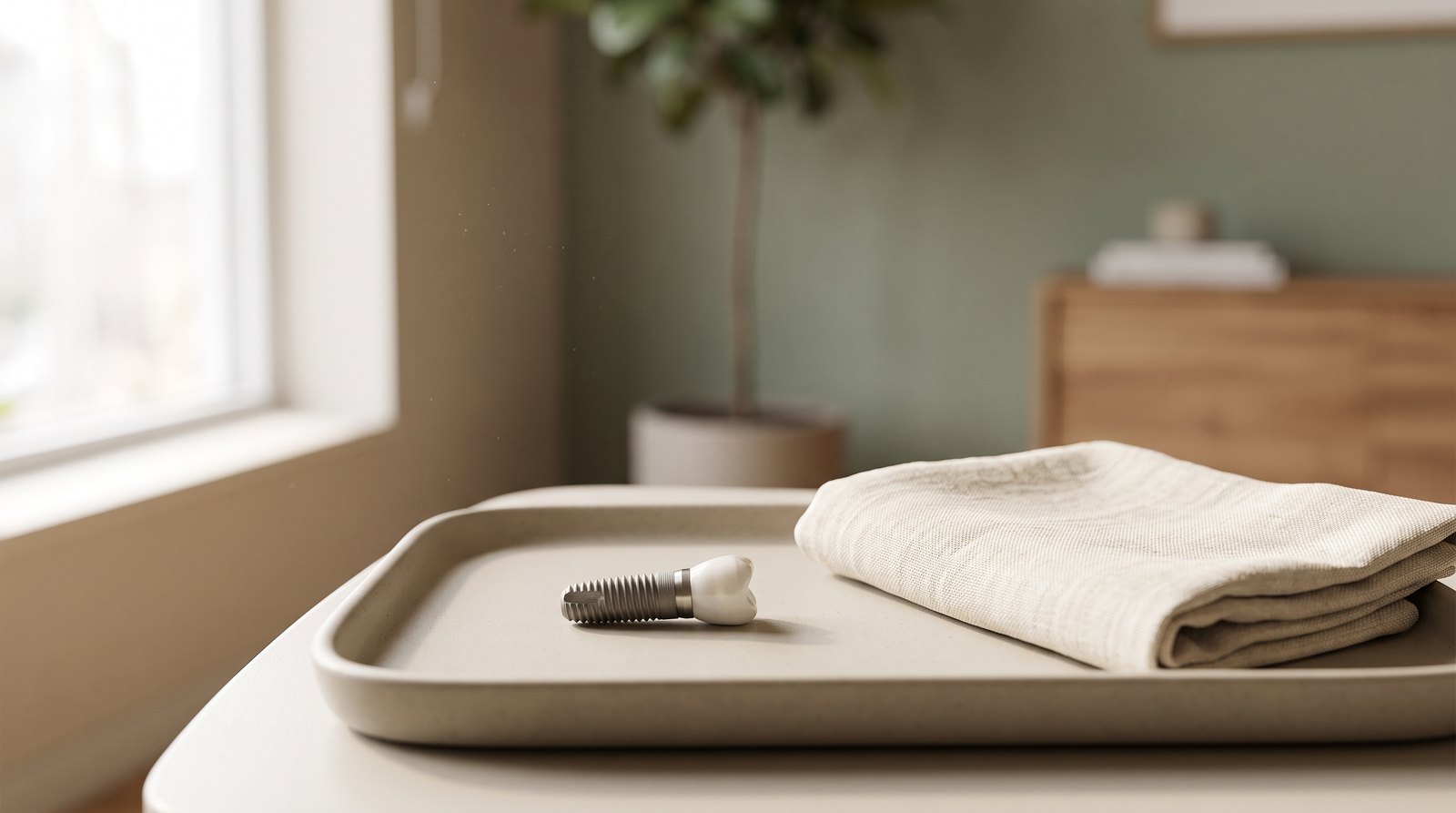
A mini dental implant is a single-piece titanium screw, narrower than a standard implant, that is placed into the jawbone to support a tooth replacement or hold a denture in place. Where a standard implant has separate parts, a mini is usually one solid piece with a small ball top. The slim design lets it fit where bone is limited.
The placement is generally gentler than standard implant surgery. In many cases, the mini can be inserted through the gum without a large incision, and you go home the same day. For someone who feels anxious about dental work, that simpler process can be reassuring, and oral sedation is available at our Leduc office to help you stay calm.
To understand the difference clearly, it helps to know how the full-size version works. You can read more in our guide to standard dental implants explained, which covers the longer, two-stage process most people picture when they hear the word "implant".
How do mini implants differ from standard dental implants?
The main difference is width. A mini dental implant is roughly half the diameter of a standard implant, which changes how much bone it needs, how it is placed, and what it can support. Standard implants are sturdier and handle heavier chewing forces, while minis trade some of that strength for a simpler, less invasive procedure.
Size and bone requirements
Standard implants need a certain amount of healthy bone width to sit safely. When that bone has shrunk after years of missing teeth, a full-size implant may require a bone graft first. Minis are slim enough to skip that step in many situations, which is part of their appeal for narrow ridges.
The procedure and healing
Placing a standard implant often means opening the gum, then waiting several months for the bone to fuse before the final tooth goes on. With minis, the post and the connection are one piece, so in some cases a denture can clip on much sooner. Healing tends to feel lighter, with less swelling for most people.
Strength and what they support
Because they are thinner, mini implants carry less load. They work well for holding a lower denture steady or filling a slim gap. For a back molar that grinds through tough food every day, Dr. Lesko usually leans toward a standard implant, which is built to take that pressure over the long run.
What are the downsides of mini dental implants?
The honest downside of mini dental implants is that their slim shape makes them less durable under heavy chewing, so they are not ideal for every tooth. They can also be harder to repair if something goes wrong, since the post and abutment are a single piece. Knowing the limits up front helps you make a confident choice.
Here are the trade-offs worth weighing before you decide:
Lower load capacity. Minis handle less force than standard implants, which makes them a weaker fit for large back teeth.
One-piece design. If the top wears or the post is damaged, the whole implant may need to be addressed rather than just a part swapped out.
Bone matters. Even a slim implant needs healthy bone to hold. Very poor bone quality can still rule them out.
Not for everyone. Heavy grinders and people who clench hard at night may put too much strain on a narrow post.
None of this means minis are a poor choice. It means they are a tool for the right job. During your exam in Leduc, Dr. Lesko checks your bone, your bite, and your goals before suggesting anything, because the wrong tool in the right mouth still disappoints.
Who are mini dental implants a good option for?
Mini dental implants are often a good option for people who want a loose lower denture to stop slipping, or who have a narrow jaw ridge that cannot hold a standard implant without grafting. They can also help patients who prefer a quicker, gentler procedure. The right fit depends on your bone, your bite, and what you want day to day.
Stabilising a lower denture
A bottom denture that floats and clicks while you talk is a common frustration. A few mini implants can anchor it so it stays put when you eat and laugh. Many people tell us it makes a real difference to daily life, simply because they can finally enjoy a meal without worrying.
Tight or narrow spaces
Some gaps, especially among the front lower teeth, are too slim for a standard implant. A mini can fill that narrow space when a full-size post will not fit, giving you a stable result without rebuilding bone first.
Weighing implants against a denture alone
If you are still deciding between fixed teeth and removable ones, it helps to compare the whole picture. Our article on implants versus dentures walks through comfort, care, and lifestyle so you can see where a mini-supported denture lands between the two.
How long do mini dental implants last?
With good home care and regular checkups, mini dental implants can last many years, and in many cases a decade or longer. Their lifespan depends on your bone health, your bite, how well you clean around them, and whether you grind your teeth. Standard implants often last longer, but a well-placed mini in the right mouth holds up reliably.
What helps them last
The habits that protect natural teeth protect implants too. There is no magic to it, just consistency.
Brush twice a day and clean gently around each implant where it meets the gum.
Keep your regular cleanings so we can catch any early gum trouble.
Wear a night guard if you grind, which spares the post from extra strain.
Treat dry mouth, smoking, or uncontrolled diabetes, since each can affect healing and gum health.
This is general information, and every mouth is different. The only way to know whether mini implants suit you is an in-person exam, where Dr. Lesko can look at your bone and bite directly. When cost comes up, you receive a clear written estimate after your exam, and payment plans are available, so there are no surprises.
Frequently Asked Questions
What is a mini dental implant?
A mini dental implant is a narrow titanium screw placed in the jaw to replace a tooth root or hold a denture steady. It is slimmer than a standard implant and usually made as one solid piece. That smaller size lets it fit into tight spaces or jaws with limited bone.
What are the downsides of mini dental implants?
Because they are thin, mini implants handle less chewing force, so they are not ideal for large back teeth or heavy grinders. Their one-piece design can also make repairs less flexible than with standard implants. They still need healthy bone, so very poor bone may rule them out.
How long do mini dental implants last?
With daily cleaning and regular dental visits, mini implants can last many years, often a decade or more. Longevity depends on your bone, your bite, and habits like grinding or smoking. Standard implants tend to last longer, but a well-placed mini in a suitable mouth is dependable.
Who are mini dental implants a good option for?
They suit people who want a loose lower denture to stop slipping, or who have a narrow ridge that cannot support a full-size implant without grafting. They also help patients who prefer a quicker, gentler procedure. An exam confirms whether your bone and bite are a good match.
If you are weighing mini dental implants and want a clear, honest answer about your own situation, the team at TLC Family Dental Centre in Leduc is here to help. Book your consultation online or call us at 780.980.5115, and Dr. Kyle Lesko will examine your bone and bite at 5209 Discovery Way #4 and walk you through what is realistic for your smile.
About
Featured Posts


Explore Topics