Dental Implants vs Dentures: Which Is Right for You?
Dental implants are titanium posts placed in your jaw that act like permanent roots, while dentures rest removably on your gums. Implants offer more stability and preserve bone; dentures avoid surgery and start sooner.

Dr. Kyle Lesko
The quick version
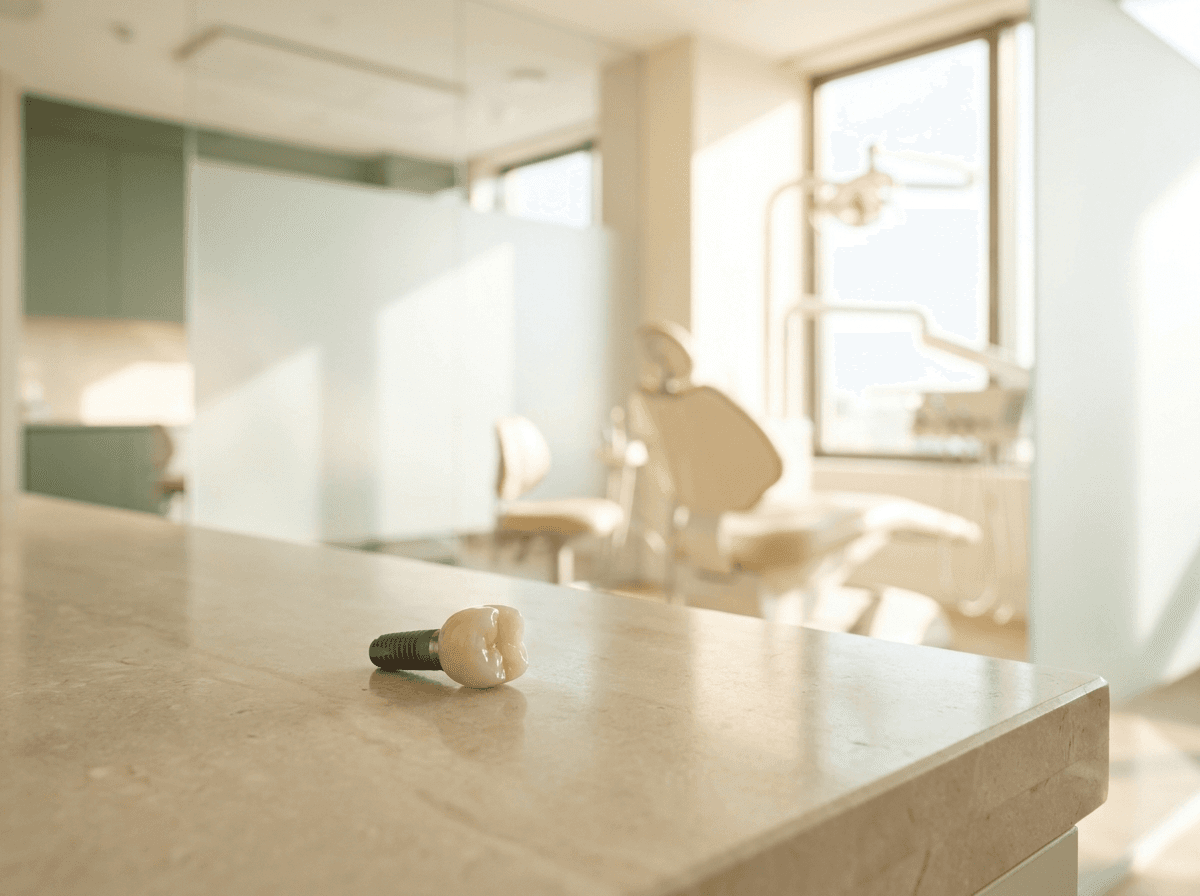
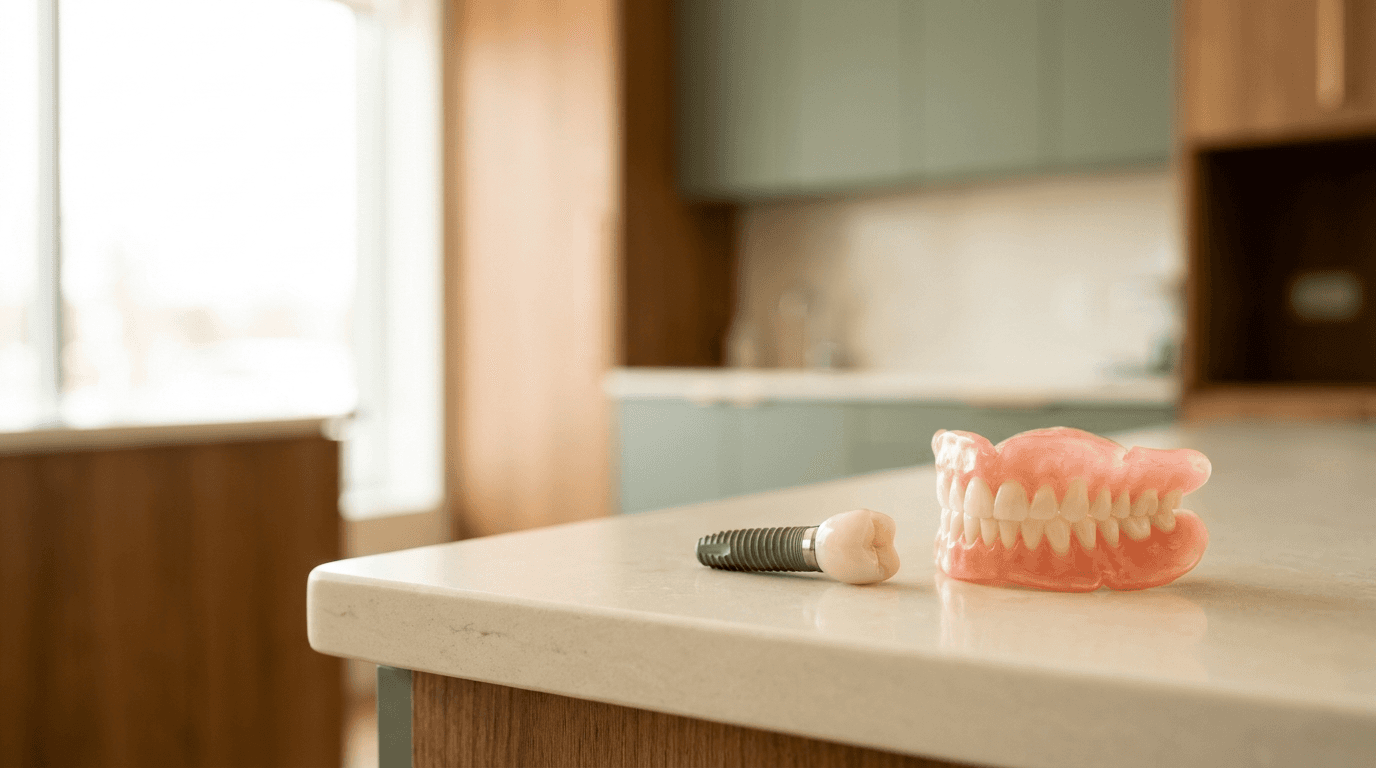
Dental implants are small titanium posts surgically placed into the jawbone, where they fuse with the bone over a healing period and support a crown, bridge, or denture.
This difference matters a great deal, and it is easy to overlook.
Daily care is one place where dentures are actually simpler to begin with.
Most healthy adults with enough jawbone are candidates for implants, but it is not automatic for everyone.
When weighing dental implants vs dentures, the simplest answer is this: implants are titanium posts placed in your jaw that act like permanent tooth roots, while dentures are removable replacements that rest on your gums. Implants offer strong stability and help preserve bone, while dentures are less invasive and easier to start with.
Both options replace missing teeth and restore your ability to eat, speak, and smile with confidence. The right choice depends on your jawbone, your health, your daily habits, and what matters most to you. Dr. Kyle Lesko at TLC Family Dental Centre in Leduc sees patients lean toward each option for good reasons, and there is also a middle path that blends the two.
What is the difference between dental implants and dentures?
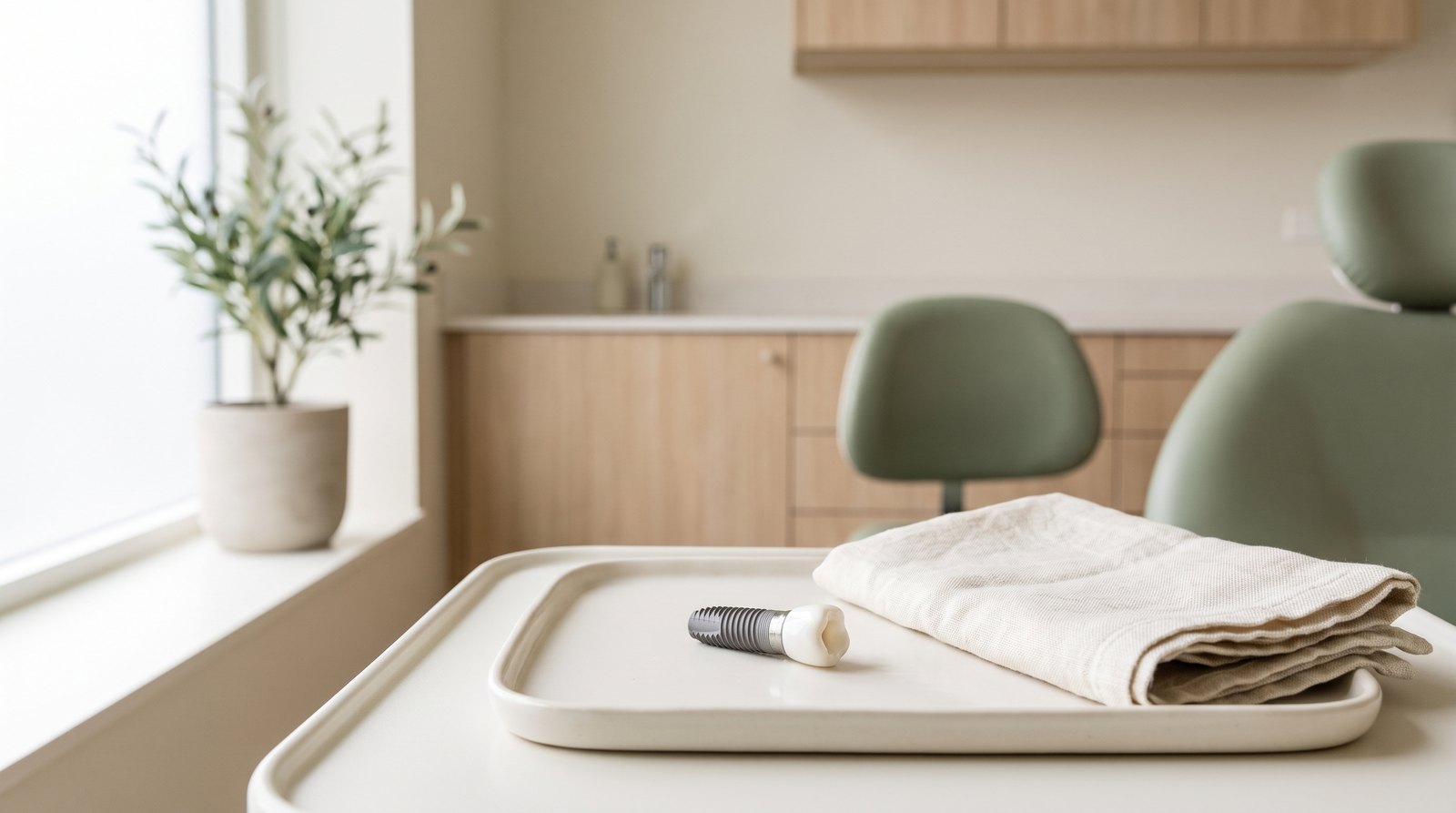
Dental implants are small titanium posts surgically placed into the jawbone, where they fuse with the bone over a healing period and support a crown, bridge, or denture. Dentures are removable appliances that sit on top of the gums. The core difference is anchorage: implants are fixed in bone, while traditional dentures rest on soft tissue.
Because an implant is anchored in the jaw, it behaves much like a natural tooth root. You brush it, you bite with it, and you mostly forget it is there. A removable denture, by contrast, you take out to clean and at night. If you would like a closer look at the surgical side, our guide to how dental implants work walks through each step.
How stable does each option feel?
Stability is often the deciding factor for patients. Implants do not shift, slip, or click when you eat or speak, so crunchy and chewy foods stay on the menu. Removable dentures can move a little, especially lower dentures, because there is less surface for them to grip. Many people adapt well to dentures over time, and a good fit makes a real difference, but it is honest to say they will never feel quite as locked in as an implant.
How do dental implants vs dentures affect your jawbone?
This difference matters a great deal, and it is easy to overlook. When you lose a tooth, the bone that once held it slowly shrinks, because it is no longer being stimulated by chewing. A dental implant transmits that pressure into the bone and helps keep it healthy and dense. Dentures sit on the surface and do not provide that same stimulation.
Over years of wearing a traditional denture, the underlying ridge of bone can gradually flatten. That is why a denture that fit well at first may feel looser later and need relining or remaking. It is not a failure of the denture, it is simply the bone changing shape underneath. Implants help slow this process, which is a quiet but meaningful long-term benefit.
None of this means dentures are a poor choice. It means Dr. Lesko will look at your jawbone with imaging and explain plainly what is realistic for your mouth today and over the coming years.
How do you care for implants compared with dentures?
Daily care is one place where dentures are actually simpler to begin with. You brush implants like natural teeth, with regular brushing, flossing or a water flosser, and routine checkups. Dentures come out for cleaning, you soak them, and you clean your gums separately. Both routines work well once they become habit, and both rely on keeping up with regular dental visits.
What does living with each feel like day to day?
With implants, most patients tell us the experience fades into the background. You eat what you want and brush as usual. The bigger commitment is upfront: surgery and a healing period that takes several months while the implant fuses with the bone.
With dentures, the appliance is ready sooner and there is no surgery for standard removable types. The adjustment can take a few weeks as you learn to eat and speak with them, and you build a cleaning routine into your evenings. Some people find adhesives helpful for a more secure feel. Neither path is wrong. They simply ask different things of you.
Who is a good candidate for implants, and who suits dentures?
Most healthy adults with enough jawbone are candidates for implants, but it is not automatic for everyone. Dr. Lesko considers your bone volume, your gum health, certain medical conditions, smoking, and how well diabetes or other issues are controlled, because all of these affect healing. Dentures can be a sensible choice when surgery is not ideal or when you prefer a non-surgical start.
Here are factors that often point one way or the other:
Implants tend to suit you if you have healthy gums, adequate bone, and you want a fixed solution that feels closest to natural teeth.
Dentures tend to suit you if you want to avoid surgery, need a faster start, or have significant bone loss that makes implants more complex.
Your health history matters, since uncontrolled conditions can slow healing and change the safest plan.
Your daily habits matter, including whether you would prefer something you never remove versus an appliance you take out at night.
If you are only missing one or a few teeth, you may also be comparing implants with a fixed bridge. Our article on implants compared with bridges covers that smaller-scale decision.
What are implant-supported dentures, the middle option?
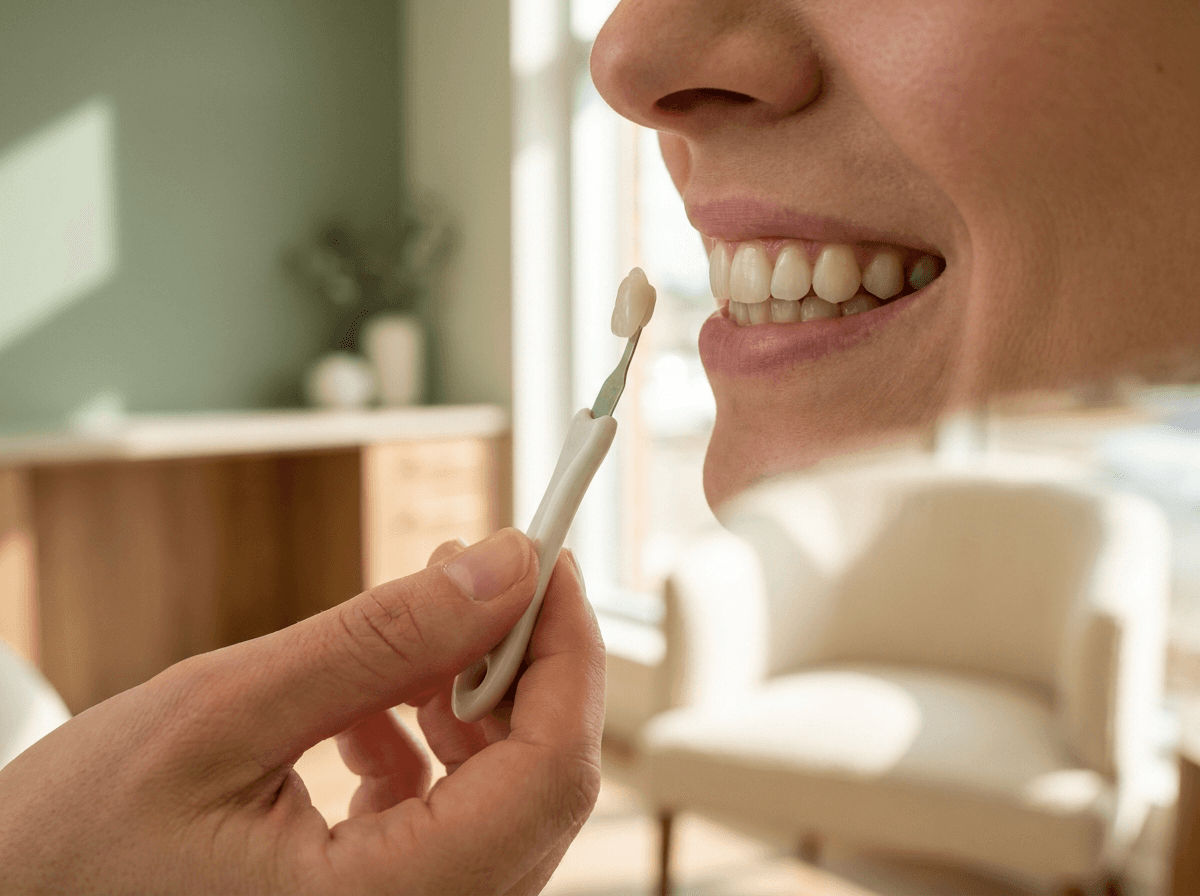
Implant-supported dentures combine the two approaches, and for many people they offer a comfortable balance. A small number of implants are placed in the jaw, and a denture clips or screws onto them. You get much of the stability and bone benefit of implants without placing an implant for every single tooth, which keeps the surgery more contained.
This middle path comes in a few forms. Some implant-supported dentures snap on and off so you can remove them for cleaning. Others are fixed and stay in place, removed only by your dentist. For replacing a full arch of teeth, full-arch implant options and implant-supported dentures can give you a steady, confident bite that a traditional removable denture may not match.
Do these options fit a full set of teeth?
Yes. When all the teeth in an arch are missing, an implant-supported full arch is one of the more stable ways to restore them. The denture rests on implants rather than gum tissue, so it does not rock or slide the way a conventional full denture sometimes can. Dr. Lesko will explain which design fits your bone and your goals after examining your mouth.
What about cost and the decision itself?
Cost is a fair question, and it varies from person to person because it depends on how many teeth you are replacing, the condition of your bone, and the design you choose. Rather than quoting numbers online, we keep it straightforward: after your exam, you receive a clear written estimate, and payment plans are available so you can plan with confidence.
The honest truth is that there is no single winner in dental implants vs dentures. There is the option that fits your mouth, your health, and your life. A short consultation in Leduc lets Dr. Lesko look at the real picture and give you advice meant for you, not for a generic case online.
This article is general information. It is not a substitute for an in-person exam, which is the only way to know what is right for your individual situation.
Frequently Asked Questions
Which is better, dentures or dental implants?
Neither is better for everyone. Implants offer more stability and help preserve jawbone, while dentures avoid surgery and start sooner. The right choice depends on your bone, your health, and your preferences. Dr. Lesko can help you weigh both after a proper exam.
Why might a dentist not recommend an implant for someone?
An implant needs enough healthy bone to anchor into and gums that can heal well. Significant bone loss, uncontrolled conditions like diabetes, heavy smoking, or certain medications can raise the risk of an implant not integrating. In those cases, a dentist may suggest bone grafting first or a non-surgical option instead.
Do you have to take implant-supported teeth out at night?
It depends on the design. Snap-on implant dentures are usually removed at night for cleaning and to let your gums rest. Fixed implant-supported teeth stay in place and are cared for in your mouth, removed only by your dentist. Dr. Lesko will tell you which type you have and how to care for it.
What are the newer alternatives to traditional dentures?
The main alternatives are implant-supported dentures and full-arch implant options, where a denture or fixed set of teeth attaches to implants rather than resting on the gums. These provide a steadier bite and help preserve bone. They suit many people who found traditional removable dentures loose or uncomfortable.
If you are weighing your options for replacing teeth, the team at TLC Family Dental Centre in Leduc is here to help. Book your consultation online or call us at 780.980.5115, and Dr. Kyle Lesko will examine your mouth, explain dental implants vs dentures in plain language, and recommend what is realistic for you. You can find us at 5209 Discovery Way #4 in Leduc, serving Leduc and the greater Edmonton area.
About
Featured Posts


Explore Topics