Invisalign vs Braces: Which Is Right for Your Smile?
In the Invisalign vs braces question, neither is better for everyone. Invisalign uses discreet, removable trays, while braces are fixed and handle very complex movements. The right choice depends on your case and habits.

Dr. Kyle Lesko

The quick version
Invisalign is a series of custom clear aligners you wear over your teeth and swap out every week or two.
Day-to-day living is where aligners and braces feel most different.
Speed depends far more on your case than on the appliance itself.
This is the quiet downside of aligners, and it deserves an honest answer.
In the Invisalign vs braces question, the honest answer is that neither is better for everyone. Invisalign uses clear, removable trays that are nearly invisible and easy to take out for meals. Braces use fixed brackets and wires that stay on the whole time and can handle very complex movements. The right choice depends on your case, your habits, and how visible you want treatment to be.
Both straighten teeth and improve your bite. The difference is in how they get there and what they ask of you day to day. Dr. Kyle Lesko at TLC Family Dental Centre in Leduc helps patients weigh the trade-offs honestly, because the option that suits your neighbour may not be the one that suits you.
What is the real difference between Invisalign and braces?
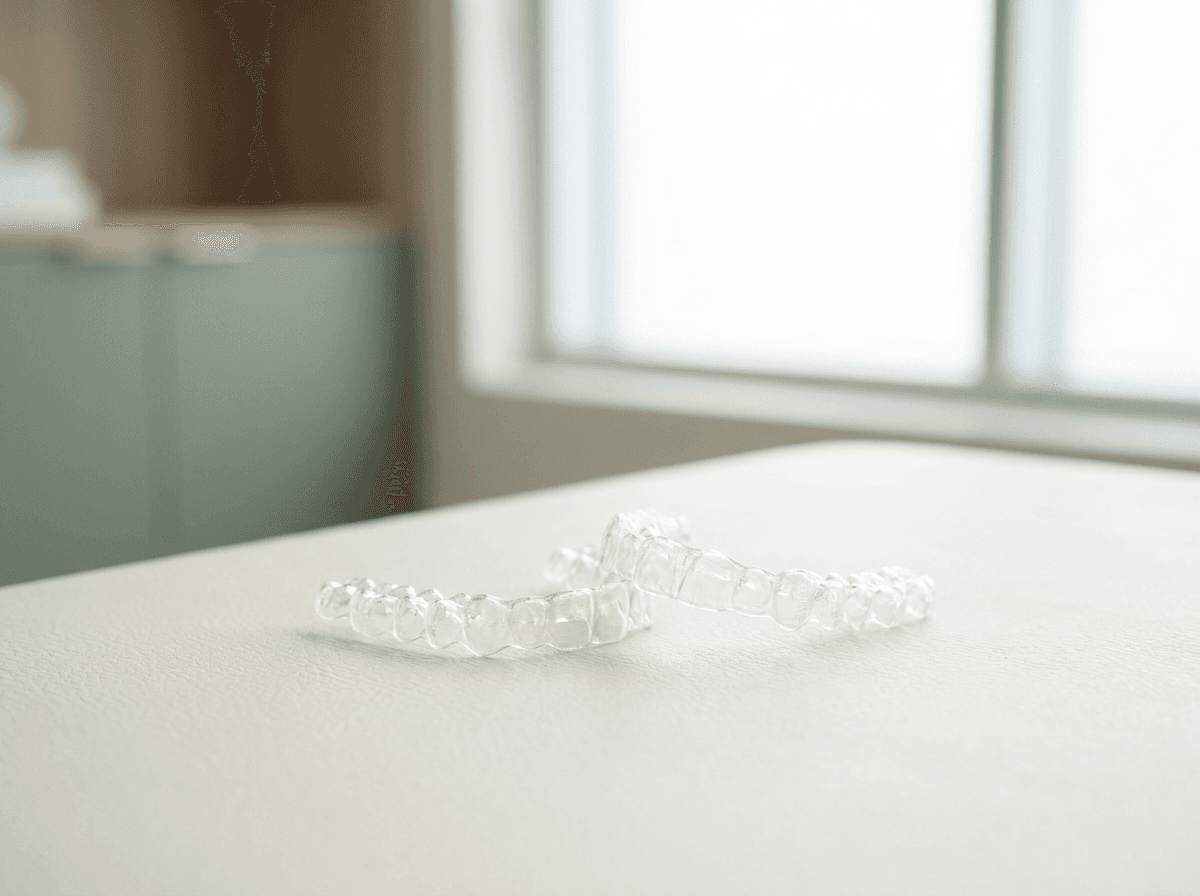
Invisalign is a series of custom clear aligners you wear over your teeth and swap out every week or two. Braces are brackets bonded to each tooth and connected by a wire your dentist adjusts over time. Aligners are removable and discreet. Braces are fixed and stay working around the clock.
That single difference, removable versus fixed, drives almost everything else in this comparison. With aligners, you are in charge of how many hours a day they stay in. With braces, the appliance does its job whether you think about it or not. Both move teeth using gentle, steady pressure, just delivered in different ways.
How do they look while you are in treatment?
Appearance is the reason many adults look at clear aligners in the first place. Invisalign trays are see-through and sit close to the teeth, so most people barely notice them in conversation or photos. Braces are more visible, though modern brackets are smaller than the metal of years past, and some patients choose tooth-coloured options. If looking like you are not in treatment matters to you, aligners have a clear edge here.
Invisalign vs braces for eating, cleaning, and comfort
Day-to-day living is where aligners and braces feel most different. Because Invisalign trays come out, you eat normally and brush and floss the way you always have. Braces stay put, so certain sticky and hard foods are off the menu, and cleaning around brackets and wires takes more patience. Many patients tell us this practical side shapes their decision as much as appearance.
What is eating like with each?
With aligners, you simply take the trays out before you eat and put them back after you brush. Nothing is forbidden. With braces, you learn to avoid foods that can snap a wire or pull off a bracket, like popcorn hulls, hard candy, and chewy caramels. Neither is a hardship, but the freedom around food is a genuine point in favour of aligners for a lot of people.
What about keeping teeth clean?
Cleaning is simpler with Invisalign because you remove the trays and brush as usual, then rinse the aligners. With braces, food can lodge around the brackets, so you spend more time with a brush, floss threaders, and sometimes a water flosser to keep everything healthy. Good hygiene matters either way, since clean teeth and gums protect the result you are working toward.
Which feels more comfortable?
Both can cause mild soreness, especially in the first day or two after a change. Aligners press gently as you start a new tray, and that pressure means your teeth are moving. Braces can rub the inside of your cheeks and lips, particularly early on, though dental wax helps. Most patients settle into either option within a week or so and stop noticing the sensation.
Which is faster, Invisalign or braces?
Speed depends far more on your case than on the appliance itself. Mild crowding or spacing can finish in well under a year with either method, while complex bite corrections take longer no matter which you choose. Aligners can move quickly when worn faithfully, but missed hours stretch the timeline. For a fuller picture, see how long Invisalign takes.
Here is the honest nuance. Braces work continuously because they never come off, so they do not depend on your discipline to keep moving teeth. Aligners can match or beat that pace, but only if you keep them in for the hours Dr. Lesko prescribes. If you know you might forget, that consistency question matters more than any headline speed claim.
Why do some people stop wearing Invisalign?
This is the quiet downside of aligners, and it deserves an honest answer. Invisalign only works while the trays are in your mouth, and most plans ask for the trays to stay in around twenty-two hours a day. Because they come out so easily, some people leave them out too long, lose track of trays, or skip them when life gets busy. The result is a stalled or slower treatment.
Patients usually stop wearing aligners for a handful of reasons:
The discipline of wear. Twenty-two hours a day sounds easy until a long lunch, a meeting, and a coffee chip away at the count.
Losing trays. Aligners are clear and easy to wrap in a napkin and toss out by accident, which interrupts the sequence.
Underestimating the commitment. Some assume aligners are effortless and are surprised that results truly depend on them.
Forgetting to switch trays on time. Falling behind on the schedule slows everything down.
None of this means aligners are a poor choice. It means they reward consistency. Braces remove that variable, which is exactly why Dr. Lesko sometimes recommends them for patients who would rather not manage the daily responsibility themselves.
Which is better for complex cases?
For complicated movements, traditional braces often have the advantage. Braces can apply precise force in several directions at once and rotate or upright stubborn teeth that aligners handle less predictably. Severe crowding, large gaps, and significant bite problems can sometimes be corrected more reliably with fixed brackets, though aligners keep improving for moderate cases.
That said, clear aligners now treat a wide range of situations that once needed braces, especially mild-to-moderate crowding, spacing, and many bite concerns. Attachments, small tooth-coloured bumps bonded to the teeth, give aligners extra grip for trickier moves. The only way to know which suits your case is an exam, where Dr. Lesko looks at your teeth and bite and explains plainly what each method can realistically achieve for you.
Can you combine the two?
Sometimes, yes. A few patients begin with braces to handle the hardest movements, then finish with aligners for the detailing, or the reverse. This is not common, but it shows the two are tools rather than rivals. The goal is a healthy, well-aligned bite, and the path there is whatever fits your mouth.
How do you choose between Invisalign and braces?
The decision comes down to a few honest questions about your case and your life. Both methods can produce a healthy, well-aligned smile, so this is about fit, not about one method winning. Dr. Lesko walks through these factors with every patient before recommending a direction, because the same answer rarely fits two different people.
How complex is your case? Simpler corrections suit either option; very complex movements may lean toward braces.
How disciplined will you be? Aligners depend on wearing them faithfully; braces do the work without your daily effort.
How much does appearance matter? If near-invisible treatment is a priority, aligners stand out.
What is your lifestyle like? If you value eating freely and easy cleaning, aligners help; if you would forget to wear trays, braces remove that worry.
Cost is a fair question too, and it varies from person to person because it depends on your case and how long treatment takes. Rather than quote numbers online, we keep it simple: after your exam you receive a clear written estimate, and payment plans are available so you can plan with confidence. For anxious patients, oral sedation is available to make appointments calmer.
This article is general information. It is not a substitute for an in-person exam, which is the only way to know what is right for your individual situation. If you would like to understand the aligner side in more depth first, here is a full guide to clear aligners.
Frequently Asked Questions
Is Invisalign or braces better?
Neither is better for everyone. Invisalign is discreet, removable, and easy to clean around, while braces are fixed and often stronger for complex movements. The right choice depends on your case and how consistent you will be with wear. Dr. Lesko can guide you after an exam.
Which is faster, Invisalign or braces?
Speed depends mostly on how complex your case is, not the method. Mild cases can finish quickly with either, while difficult corrections take longer no matter what. Aligners can be fast when worn the prescribed hours each day, but missed wear time slows progress.
Why do some people stop wearing Invisalign?
Because aligners come out so easily, some people leave them out too long, lose trays, or fall behind on switching them. Treatment only progresses while the trays are in, so inconsistency stalls results. Patients who know they may forget often do better with fixed braces.
Which is better for complex cases?
Traditional braces often have the edge for very complex movements, since they can apply precise force in several directions and rotate stubborn teeth reliably. Clear aligners handle a wide and growing range of moderate cases well. An exam is the only way to know which fits your mouth.
If you are weighing Invisalign vs braces, the team at TLC Family Dental Centre in Leduc is here to help. Book your consultation online or call us at 780.980.5115, and Dr. Kyle Lesko will examine your teeth and bite, explain both options in plain language, and recommend what is realistic for your smile. You can find us at 5209 Discovery Way #4 in Leduc, serving Leduc and the greater Edmonton area.
About
Featured Posts


Explore Topics