
How Long Does Invisalign Take? A Realistic Timeline
How long does Invisalign take? Most people finish in six months to two years, with many average cases around twelve to eighteen months. Your timeline depends on tooth movement, bite complexity, and consistent daily wear.

Dr. Kyle Lesko
The quick version
Invisalign usually runs from about six months for minor corrections to roughly two years for more involved cases, with a common middle ground near a year.
Yes, and this is the part of treatment you control directly.
The first few days with any new aligner set tend to stand out, and that mild tenderness is normal.
The most common reason Invisalign runs long is simple.
How long does Invisalign take? For most people, Invisalign treatment takes somewhere between six months and two years, with many average cases landing around twelve to eighteen months. The exact timeline depends on how much your teeth need to move, how complex your bite is, and how faithfully you wear your aligners each day.
That range can feel wide if you are just starting to look into clear aligners. Below, we will walk through what shapes your personal timeline, why daily wear matters so much, and what those first few days in a new tray actually feel like. The goal is to help you set realistic expectations before you ever sit in the chair.
How long does Invisalign take from start to finish?
Invisalign usually runs from about six months for minor corrections to roughly two years for more involved cases, with a common middle ground near a year. Simple spacing or a little crowding can wrap up quickly, while bigger bite changes take longer because teeth move gradually and safely over time.
Your teeth do not move in a straight line on a calendar. They shift a small amount with each set of aligners, and your body needs time to settle the bone around each tooth in its new position. Pushing faster than your biology allows is not safe, so the timeline reflects what is healthy, not just what is convenient.
When you start, Dr. Kyle Lesko maps out a full plan and gives you an estimated number of aligner sets. That estimate is your roadmap, though small adjustments along the way are normal. Some people finish close to the original projection, while others need a few extra trays to fine-tune the final result.
What a typical timeline looks like
Here is a general sense of how different cases tend to compare. Your own plan will be specific to your mouth, so treat this as a rough guide rather than a promise.
Minor cases: small gaps or slight crowding often take about six months.
Moderate cases: noticeable crowding or spacing commonly runs twelve to eighteen months.
More complex cases: larger bite corrections can take up to two years or a little more.
Curious whether clear aligners suit your situation in the first place? Our guide on whether is Invisalign right for you walks through who tends to be a good candidate.
Do you really wear Invisalign 20 to 22 hours a day?
Yes, and this is the part of treatment you control directly. Invisalign works as intended when you wear your aligners about 20 to 22 hours every day, taking them out only to eat, drink anything other than water, and brush. The trays apply gentle, steady pressure, and that pressure only does its job while they are actually in your mouth.
Think of it like this. The aligners do not move your teeth in a few intense bursts. They guide your teeth slowly across most of the day and night, including while you sleep. Every hour a tray sits in its case instead of on your teeth is an hour your treatment stalls.
In our experience, the patients who stay close to that 22-hour mark tend to finish near their projected timeline and feel good about their progress. The ones who frequently forget to put their trays back in after meals often see their timeline stretch out. The plastic is nearly invisible and comfortable, so many people find the habit becomes second nature within a week or two.
Simple habits that keep you on track
Staying consistent is easier with a few small routines. Many of our Leduc patients find these help the trays become part of daily life rather than a chore.
Put your aligners back in right after eating, before you get distracted.
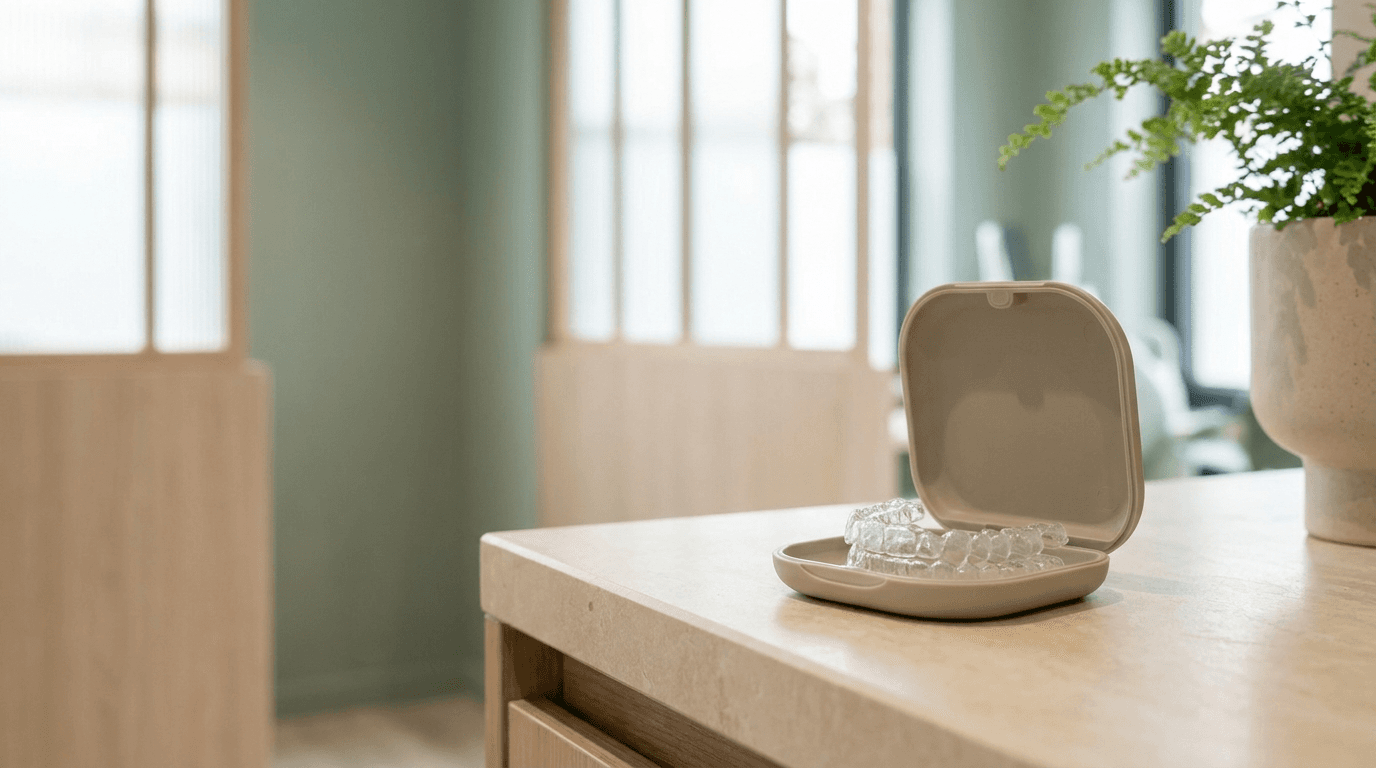
Keep your case with you so you are never tempted to wrap a tray in a napkin.
Carry a travel toothbrush for quick cleanups when you are out.
Set a gentle phone reminder during the first couple of weeks while the habit forms.
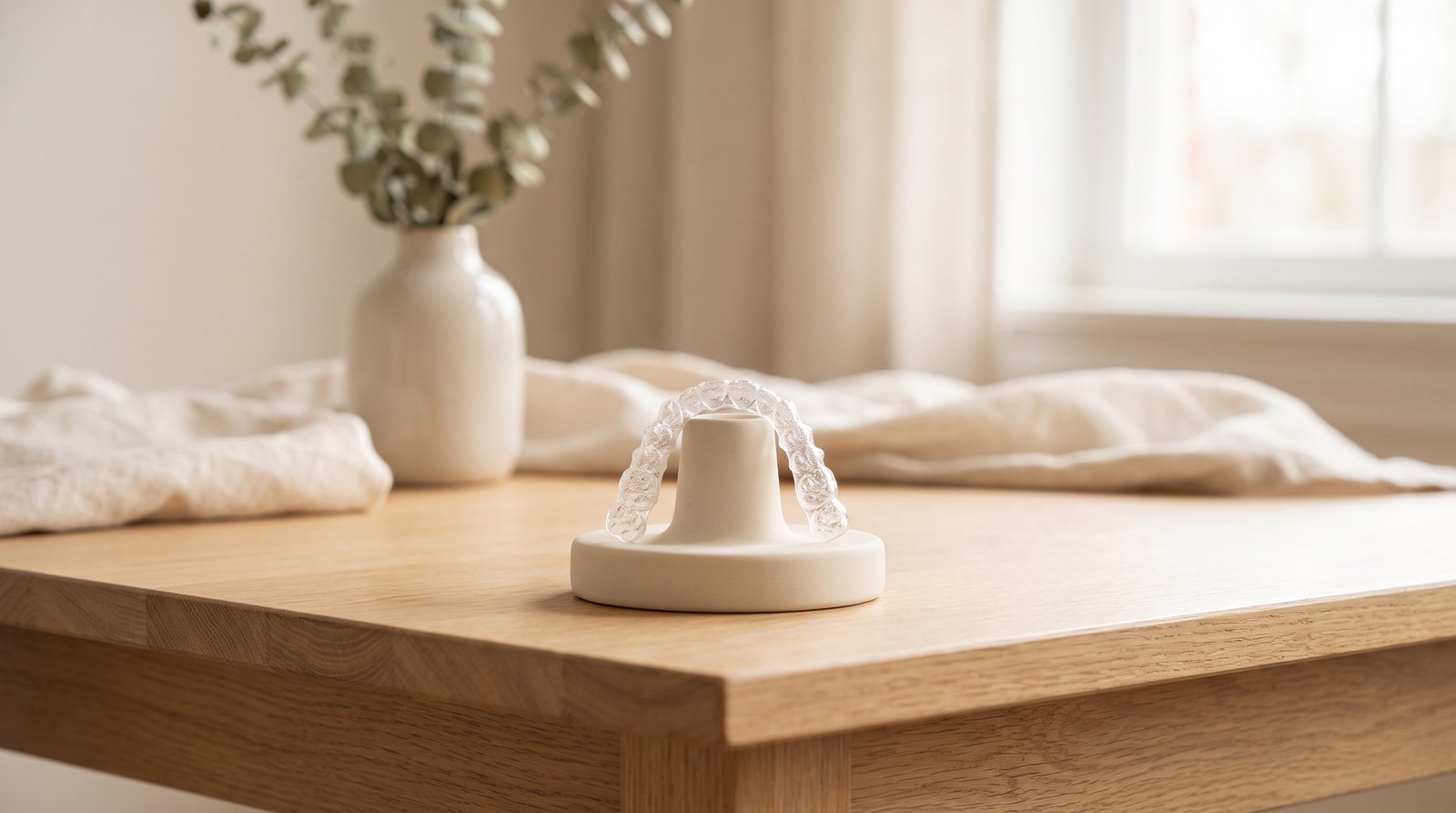
What does the early uncomfortable stage of Invisalign feel like?
The first few days with any new aligner set tend to stand out, and that mild tenderness is normal. Many people feel pressure or a dull ache when they snap in a fresh tray, especially within the first 24 to 48 hours. That feeling means your teeth are moving as planned, and it usually eases as the days go on.
Each new set of aligners is slightly different from the last, so it nudges your teeth a little further. When you first click them in, they can feel tight. Some people notice it most when they bite down or when they take the trays out to eat. By the third or fourth day, the same set typically feels easy and almost forgettable.
The very start of treatment also takes some adjusting. Speaking with the trays in can feel a touch odd for the first day or two, and a slight lisp is common before your tongue adapts. This passes quickly for most people. None of this should be sharp or alarming, and simple steps keep you comfortable.
Ways to ease the tender days
A few small choices make the early part of each new tray more comfortable.
Switch to a new aligner set at night, so you sleep through the tightest hours.
Stick to softer foods for a day after each change if your teeth feel sensitive.
Drink cool water and use over-the-counter pain relief if your dentist says it is appropriate for you.
Keep wearing the trays through the tenderness, since removing them slows your progress.
For patients who feel anxious about dental treatment, oral sedation is available at our Leduc office to help you stay relaxed during appointments. Comfort matters to us as much as the result.
What can make Invisalign take longer than expected?
The most common reason Invisalign runs long is simple. Not wearing the aligners enough. When trays spend too many hours out of your mouth, teeth fall behind the plan, and treatment stretches to catch up. A handful of other factors can also add time, and knowing them upfront helps you avoid surprises.
Some of these are within your control, and some come down to the nature of your case. Dr. Kyle Lesko reviews your progress at check-ins to spot any drift early, so the plan can be adjusted before small delays grow into big ones. Honest tracking is how we keep your timeline as tight as your biology allows.
Common reasons treatment runs long
Inconsistent wear: the most common cause, by far. Aim for that 20 to 22 hours daily.
Complex movements: rotating a tooth or closing a large gap simply takes more sets.
Refinements: many cases include a short round of extra trays to polish the final fit, which is normal and expected.
Attachments and elastics: if your plan uses small tooth-coloured bumps or rubber bands, skipping them can slow things down.
Lost or skipped trays: falling out of sequence forces a step back to stay safe.
Wondering how this timeline stacks up against metal brackets? You can read our overview of Invisalign compared with braces for a side-by-side look.
Frequently Asked Questions
How long does Invisalign treatment take?
Invisalign treatment usually takes between six months and two years, with many cases finishing around twelve to eighteen months. The length depends on how much your teeth need to move and how consistently you wear your aligners. After an exam, Dr. Kyle Lesko can give you an estimate tailored to your smile.
Do you really wear Invisalign 22 hours a day?
Yes, the standard guidance is about 20 to 22 hours of daily wear. You remove the trays to eat, to drink anything other than water, and to brush, then put them straight back in. Wearing them less than this is the most common reason treatment takes longer than planned.
Which stage of Invisalign feels most uncomfortable?
The first day or two with each new aligner set tends to feel the tightest, and the very start of treatment is often when you notice the trays the most. You may feel pressure or mild tenderness as your teeth begin to move. For many people this fades within a few days as the teeth settle.
What can make Invisalign take longer?
Not wearing your aligners enough is the biggest cause of delays. Complex tooth movements, planned refinement trays, skipping attachments or elastics, and losing aligners can also add time. Staying close to 20 to 22 hours of daily wear is a reliable way to keep treatment on track.
A quick note before you decide
Everything here is general information to help you understand what Invisalign timelines tend to look like. Your own treatment depends on your teeth, your bite, and your goals, which can only be assessed in person. An exam is the only way to know what is realistic for you.
If you are thinking about straightening your smile, the team at TLC Family Dental Centre in Leduc is happy to help. Book your consultation online or call us at 780.980.5115, and Dr. Kyle Lesko will walk you through a realistic timeline at our office at 5209 Discovery Way #4. We welcome patients from Leduc and across the Edmonton area.
About
Featured Posts


Explore Topics