Bone Grafting for Dental Implants: When It Is Needed
Bone grafting for dental implants rebuilds the jawbone so it can firmly support an implant. You need a graft when there is not enough healthy bone, and many people with bone loss can still qualify once it heals.

Dr. Kyle Lesko
The quick version
A dental implant is a small titanium post that acts as an artificial tooth root, and it needs solid bone around it to stay anchored.
You need a bone graft when the exam shows there is not enough healthy bone to fully surround and support an implant.
For most patients, a bone graft is a smaller procedure than they expect, often done with local anaesthetic and over in under an hour.
Bone grafting is a common, well-established procedure with a high success rate when the site is cared for properly.
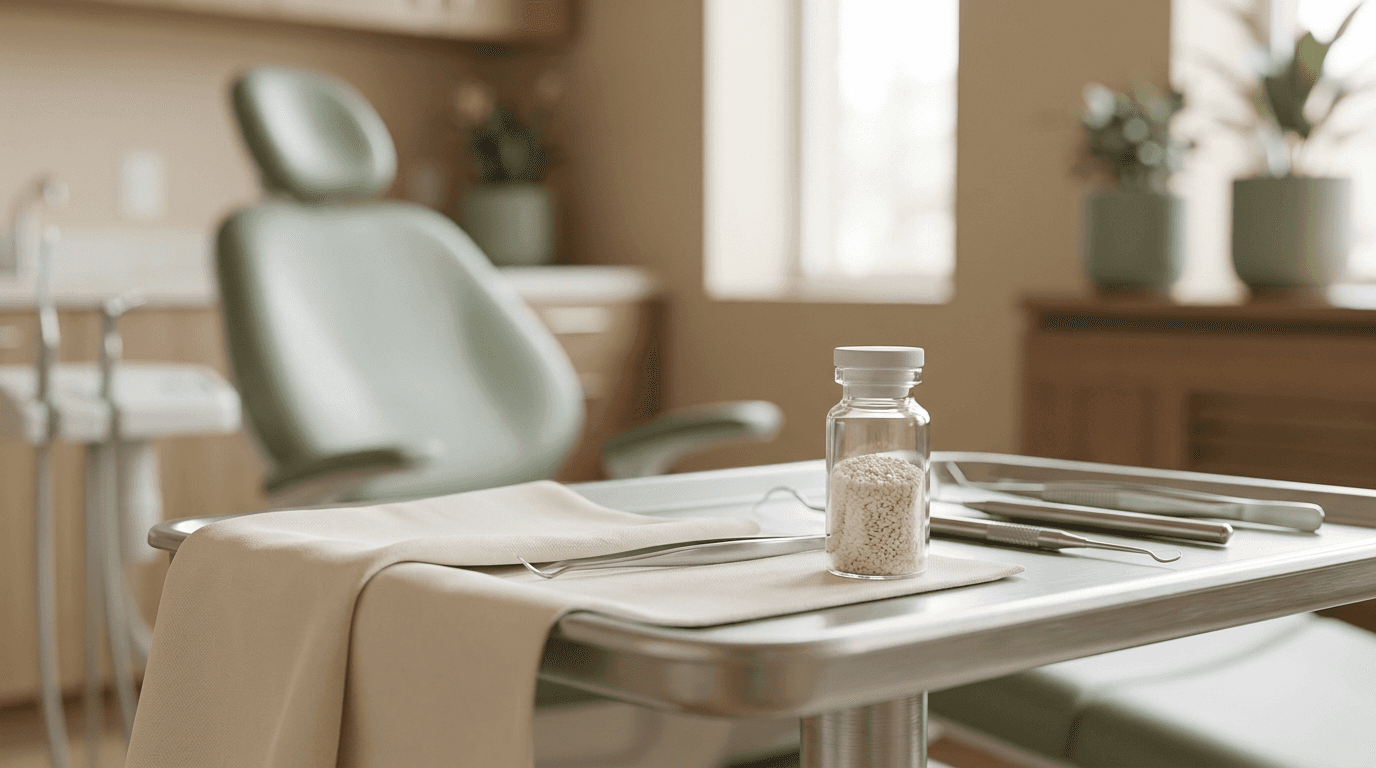
Bone grafting for dental implants is a procedure that rebuilds or reinforces the jawbone so it can firmly hold an implant. You need a graft when you do not have enough healthy bone width or height to support the implant on its own. Many people who lost bone after a missing tooth can still qualify for implants once the graft heals.
If a dentist has told you that you might need a graft before your implant, it is easy to feel discouraged. The good news is that this is a routine, well-understood step. Dr. Kyle Lesko has helped many patients in Leduc and the greater Edmonton area go from "you do not have enough bone" to a confident, lasting implant. Below, we explain why bone matters, when a graft is needed, and what the experience is honestly like.
Why does bone volume matter so much for dental implants?
A dental implant is a small titanium post that acts as an artificial tooth root, and it needs solid bone around it to stay anchored. Without enough bone, the implant cannot fuse properly and may loosen over time. Think of bone as the foundation, and the implant as a post set into it.
When a tooth goes missing, the jawbone in that spot slowly shrinks because it is no longer being used. Chewing sends pressure through your teeth into the bone, and that pressure keeps the bone strong and active. Once a tooth is gone, the bone in that area begins to thin and recede, sometimes within months.
This is why timing can matter. The longer a gap goes unfilled, the more bone tends to be lost. Gum disease, infections, injury, and long-term denture wear can also wear away bone. A graft simply restores what was lost so the foundation is ready. If you are weighing your options, our guide on how implants replace missing teeth walks through the full picture.
When is bone grafting for dental implants actually needed?
You need a bone graft when the exam shows there is not enough healthy bone to fully surround and support an implant. Dr. Lesko makes this call using a clinical exam and a 3D scan that measures bone in three dimensions. Not everyone needs a graft, so this is never assumed without looking first.
There are a few common situations where a graft tends to come up:
A tooth has been missing for a long time, so the bone in that spot has had years to thin out.
A tooth was lost to gum disease or infection, which can destroy bone around the area.
An upper back tooth is being replaced and the sinus sits low, leaving little vertical bone (a sinus area graft can add height here).
A tooth is being removed now, and a small graft is placed in the empty socket to preserve the bone for a future implant.
That last point is worth highlighting. When a tooth is extracted, a minor "socket preservation" graft placed at the same visit can prevent much of the bone loss before it starts. It is often easier to keep bone than to rebuild it later. Whether you need a graft at all is part of the larger question of who is a candidate for implants, which Dr. Lesko reviews with every patient individually.
What if I have already lost a lot of bone?
Please do not assume a past diagnosis closes the door. Grafting techniques have come a long way, and many people who were once told they had too little bone can now move forward after a graft heals. The honest answer depends on how much bone is missing and where, which is something only an in-person exam and scan can determine. It is general information here, not a personal verdict.
What is the bone grafting experience like, step by step?
For most patients, a bone graft is a smaller procedure than they expect, often done with local anaesthetic and over in under an hour. The area is numbed completely, so you should not feel pain during the appointment itself, only some pressure. For anxious patients, TLC offers oral sedation to help you stay calm and relaxed.
The graft material is what rebuilds the bone. It can come from a few sources, and Dr. Lesko chooses based on your situation:
Processed donor or animal-derived bone, which is safe, sterilized, and acts as a scaffold.
Synthetic graft material, a man-made mineral that your body gradually replaces with its own bone.
Your own bone, taken from a nearby site in some larger cases.
The material does not become your final bone on its own. Instead, it forms a framework that your body fills in with new, living bone over the following months. Over time, much of the graft is replaced by your own tissue. This is why patience during healing matters so much.
How long is recovery, and what does it feel like?
The first few days after a graft usually bring mild swelling and tenderness, similar to a tooth extraction. Most people manage well with over-the-counter pain relief, cold compresses, and soft foods. You will be asked to avoid disturbing the site, which means gentle brushing nearby and no poking with your tongue.
The deeper healing takes longer and happens quietly under the gums. Depending on the size of the graft, the bone usually needs several months to mature before it is strong enough for an implant. Smaller grafts heal faster, while larger ones take more time. Dr. Lesko sets the next step based on how you heal, not a fixed calendar.

Is bone grafting for dental implants safe, and how often does it work?
Bone grafting is a common, well-established procedure with a high success rate when the site is cared for properly. In most cases, the graft heals and creates a strong base for the implant. Failures do happen, but they are not the usual outcome, and an early issue can often be addressed before the implant is ever placed.
Being honest about risk builds trust, so here is the balanced view. A graft can fail to integrate if the area gets infected, if blood flow is poor, or if the site is disturbed during healing. Smoking is one of the biggest factors that slows bone healing and raises the chance of failure. Certain health conditions and some medications can also affect how well bone forms.
The reassuring part is that a graft is a separate, earlier step than the implant. If a graft does not take, Dr. Lesko can usually treat the area and try again, all before any implant goes in. You are not risking the implant itself at this stage. Following the aftercare instructions closely gives your body a strong chance to do its job.
What you can do to help the graft succeed
Avoid smoking and tobacco, ideally well before and during healing.
Keep the area clean exactly as instructed, without aggressive rinsing early on.
Stick to soft foods and avoid chewing directly on the site.
Take any prescribed medication as directed and keep your follow-up visits.
Tell Dr. Lesko about any health conditions or medications that could affect healing.
What does a bone graft cost, and what comes next?
The cost of a bone graft varies because it depends on the size of the graft, the material used, and your individual situation, which is why no honest figure can be quoted in advance. After your exam and scan, you receive a clear written estimate, and payment plans are available. You will know what to expect before anything is scheduled.
Once your graft has healed and the bone is strong enough, the implant placement becomes a more predictable, straightforward step. Many patients are surprised that the graft was the bigger part of the journey, and that the implant afterward felt easier. Each step is paced around your healing, not rushed.
This article is general information and cannot replace a personal exam. The only way to know whether you need a graft, and what is realistic for you, is to be seen in person so your bone and gums can be assessed directly.
Frequently Asked Questions
Is a bone graft always necessary for a dental implant?
No, a bone graft is not always necessary. Many patients have enough healthy bone to place an implant directly with no graft at all. A graft is only recommended when a clinical exam and 3D scan show that bone width or height is not sufficient to support the implant securely.
How painful is a dental bone graft?
The procedure itself is not painful because the area is fully numbed, so you mainly feel pressure rather than pain. Afterward, most people describe mild soreness and swelling for a few days, much like a tooth extraction. Over-the-counter pain relief and cold compresses usually keep you comfortable while it settles.
How long do dental bone grafts last?
A successful bone graft is meant to be a permanent part of your jaw. Over several months, your body replaces much of the graft material with your own living bone, which then behaves like the rest of your jawbone. Keeping that bone healthy with good hygiene and regular checkups helps it last for the long term.
How often do dental bone grafts fail?
Bone grafts are usually successful, and outright failure is not the common outcome. When a graft does not integrate, it is often linked to infection, smoking, or disturbing the site during healing. Because the graft is an earlier step than the implant, an issue can usually be treated and the area re-grafted before any implant is placed.
If you have been told you may need bone grafting for dental implants, or you simply want to know where you stand, the team at TLC Family Dental Centre in Leduc is glad to help. Book your consultation online or call us at 780.980.5115, and Dr. Kyle Lesko will review your bone, your goals, and your options in plain language. You can find us at 5209 Discovery Way #4 in Leduc, serving Leduc and the greater Edmonton area.
About
Featured Posts


Explore Topics