
Teeth Grinding and Jaw Pain: Do You Need a Night Guard?
A night guard for teeth grinding is a custom-fitted mouthpiece you wear while you sleep that cushions your teeth and eases the strain of clenching. It cannot stop grinding at its source, but it absorbs the force and protects worn enamel.

Dr. Kyle Lesko

The quick version
Most people who grind their teeth at night have no idea they do it, because it happens while they sleep.
Teeth grinding and clenching, known as bruxism, usually comes from a mix of factors rather than one single cause.
Yes, teeth grinding is a common cause of jaw pain and headaches.
A night guard is a custom-fitted mouthpiece you wear while you sleep.
A night guard for teeth grinding is a custom-fitted mouthpiece you wear while you sleep that cushions your teeth and eases the strain of clenching. It cannot stop grinding at its source, but it absorbs the force, protects worn enamel, and often relaxes a sore, tired jaw in the morning.
In our Leduc office, most people who ask about night guards do not walk in worried about grinding at all. They come in because their jaw aches when they wake, because their teeth feel newly sensitive, or because a partner mentioned a strange sound at night. Dr. Kyle Lesko, who earned his BSc and DDS at the University of Alberta, usually starts by looking for the quiet wear patterns grinding leaves on teeth before anyone reaches for a mouthpiece. Below we walk through the common signs of bruxism, what triggers it, how a night guard actually helps, and where its honest limits are.
How do I know if I grind my teeth at night? Common signs of bruxism
Most people who grind their teeth at night have no idea they do it, because it happens while they sleep. The clues show up in the morning instead. A tight or tired jaw, a dull headache near the temples, sensitive teeth, or a sleep partner who hears grinding are all common signs of bruxism worth paying attention to.
Night-time grinding is quiet and easy to miss, so your body often flags it before you catch yourself doing it. In our Leduc office we often see the opposite of what patients expect: the teeth tell the story before the person does. Some people notice their teeth looking flatter or shorter over time. Others feel a click in the jaw or discomfort that fades as the day goes on. None of these prove grinding on their own, but together they build a picture worth mentioning at your next visit.
Signs that often point to grinding
No single clue confirms bruxism, but a few showing up together makes it more likely. These are the ones patients bring up most often.
A sore, tight, or tired jaw first thing in the morning
Dull headaches around the temples soon after you wake
Teeth that look flattened, chipped, or worn at the edges
Increased tooth sensitivity to hot or cold
A partner who hears a grinding sound while you sleep
Aching around the ears or the sides of your face
What causes teeth grinding and clenching?
Teeth grinding and clenching, known as bruxism, usually comes from a mix of factors rather than one single cause. Stress and anxiety are among the most common triggers, but sleep issues, an uneven bite, certain medications, caffeine, and alcohol can all play a part. For many people, several of these overlap at once.
Daytime clenching and night-time grinding do not always share the same roots. Clenching while you are awake often ties back to stress or deep concentration, so you catch yourself with a locked jaw during a busy stretch. Night-time grinding is linked more closely to your sleep cycle, which is why you cannot simply decide to stop it. The patients we treat for this are frequently surprised to learn their guard protects the teeth without ending the habit itself. Understanding your likely triggers is the first step toward easing them.
Sometimes the discomfort you feel is not grinding at all. Worn enamel and exposed roots can make teeth ache too, and our guide to what causes tooth sensitivity walks through other reasons your teeth might feel tender. An exam helps sort out which cause is driving your symptoms.
Can teeth grinding cause jaw pain and headaches?
Yes, teeth grinding is a common cause of jaw pain and headaches. Clenching and grinding put repeated strain on the muscles that move your jaw. Over time that tension can lead to a sore jaw, aching around the temples, tenderness near the ears, and the tight, dull headaches that many people notice soon after waking.
The jaw muscles are powerful, and hours of grinding overnight ask a great deal of them. That constant load can leave the muscles fatigued and inflamed, much like any muscle worked too hard. In some people the strain reaches the temporomandibular joint, the hinge just in front of the ear, which can add clicking, stiffness, or discomfort when opening wide.
The pattern of these headaches is often the giveaway. They tend to appear in the morning, sit around the temples or sides of the head, and ease as the day goes on. If that sounds familiar, it is worth mentioning, because treating the grinding can quiet the headaches that come with it.

What is a night guard and how does it help?
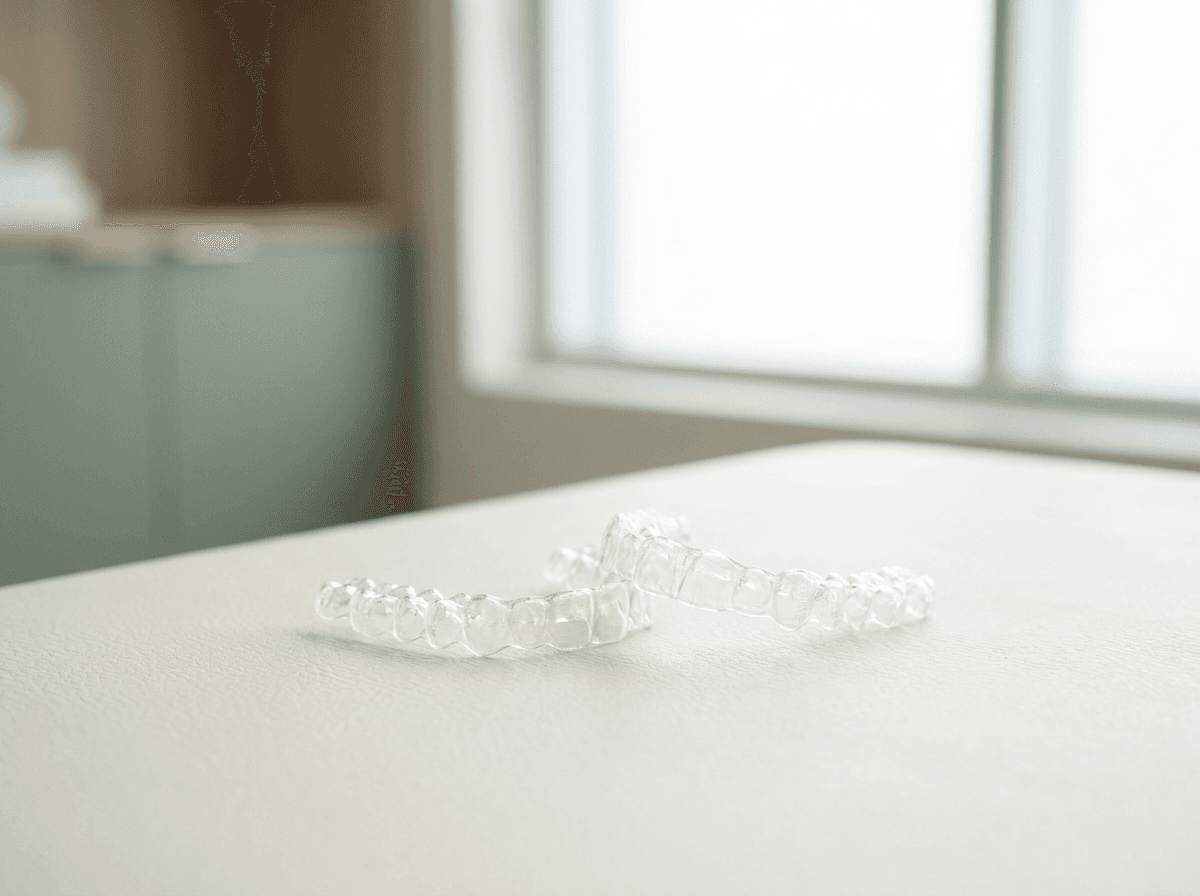
A night guard is a custom-fitted mouthpiece you wear while you sleep. It sits over your upper or lower teeth and creates a smooth, cushioned layer between them. Rather than stopping grinding at its source, it absorbs and spreads the force, which protects your enamel and often eases the muscle strain that causes morning jaw pain.
Think of a night guard as a shock absorber for your teeth. When you grind, your teeth would otherwise wear directly against each other, chipping edges and flattening surfaces over months and years. The guard takes that wear instead, sparing your enamel and any dental work you already have. Many people also find their jaw feels looser and less tender in the morning once the muscles are not clenching against hard teeth all night.
What a night guard can and cannot do
Being clear about the limits helps you set fair expectations. A night guard is a protective tool, not a cure for the habit itself.
It protects enamel and dental work from grinding wear
It often reduces morning jaw soreness and headaches
It cushions the teeth so clenching does less damage
It does not stop the grinding habit or fix its underlying cause
It works best alongside managing stress or other triggers
Custom night guard vs store-bought: what is the difference?
The main difference is fit. A custom night guard is made from an impression of your own teeth, so it sits snugly and comfortably and is built to last. A store-bought or boil-and-bite guard is a general shape you soften and mould at home, which fits more loosely and tends to wear out faster.
A store-bought guard can be a reasonable short-term trial, and some people get by with one. The trade-offs are real, though. A loose guard can feel bulky, shift while you sleep, or make it harder to breathe comfortably, so people often stop wearing it. Because the fit is imprecise, it may not spread the grinding force evenly, and in some cases an ill-fitting guard can even change how your teeth meet over time.
Here is how we handle this at TLC. We make you a custom night guard fitted to your bite, so the guard is shaped to your teeth, made from more durable material, and checked to make sure it protects without straining your jaw. Because Dr. Lesko provides comprehensive care in one place, the same person who spots the wear can plan and fit the guard, then adjust it later if your bite changes.
What we recommend, and why
A custom guard is not the only right answer for everyone. Use this quick read to decide which route fits your situation before your visit.
Occasional, mild clenching with no tooth wear: a boil-and-bite guard can be a fair short trial while you watch for changes.
Frequent morning jaw pain or headaches: a custom guard usually stays comfortable enough to wear night after night, which is what makes it work.
Visible flattening, chips, or existing crowns and veneers: a custom guard protects the enamel and dental work you already have.
A store-bought guard that shifts, feels bulky, or keeps you awake: that is a sign the fit is not spreading the force, and a properly fitted guard is the more reliable choice.
When should you see a dentist about grinding or jaw pain?
See a dentist if you notice ongoing jaw pain, frequent morning headaches, teeth that look worn or feel newly sensitive, or a clicking jaw. These signs suggest grinding may already be affecting your teeth or muscles, and an exam can confirm the cause before the wear becomes harder to manage.
Here is the line we use with patients. It is usually safe to manage at home for a week or two if your jaw feels tight only now and then, eases with rest, and your teeth look unchanged. Come in sooner if the pain is daily, if a tooth chips or feels loose, if your jaw locks or clicks painfully, or if headaches keep waking you. Enamel does not grow back once it is ground away, so the earlier we catch a pattern, the less there is to repair.
During an exam, Dr. Lesko can look for the tell-tale wear patterns, check how your jaw moves, and talk through what is likely driving your symptoms. From there you can decide together whether a custom night guard, help with your triggers, or another step fits your situation best.
This is general information, not a personal diagnosis. If any of this sounds like your mornings, becoming a new patient at TLC is a straightforward way to get a clear, in-person answer rather than guessing on your own.
Frequently Asked Questions
How do I know if I grind my teeth at night?
Because grinding happens in your sleep, the clues usually show up in the morning. A sore or tight jaw, dull headaches near the temples, worn or sensitive teeth, or a partner who hears grinding are all common signs. None confirm it alone, but together they are worth mentioning to your dentist.
Can teeth grinding cause jaw pain and headaches?
Yes. Grinding and clenching strain the muscles that move your jaw, which can lead to a sore jaw, tenderness near the ears, and dull headaches around the temples. These headaches often appear in the morning and ease during the day. Treating the grinding frequently quiets the headaches that come with it.
Does a night guard stop teeth grinding?
Not exactly. A night guard does not stop the grinding habit or fix its cause. Instead, it cushions your teeth and spreads the force, which protects your enamel and often eases morning jaw soreness. It works best alongside managing the triggers, such as stress, that set off grinding in the first place.
Is a custom night guard better than a store-bought one?
A custom guard fits your bite precisely, uses more durable material, and lasts longer, so it stays comfortable night after night. Store-bought guards can work as a short trial but fit more loosely, wear out faster, and may not spread grinding force evenly. For ongoing grinding, a custom guard is usually the steadier choice.
Talk it through with Dr. Kyle Lesko in Leduc
If you wake with a sore jaw or a morning headache, the team at TLC Family Dental Centre in Leduc is here to help. Book your visit online or call us at 780.980.5115, and Dr. Kyle Lesko will check your teeth and jaw in person and explain what is realistic for you. You will find our office at 5209 Discovery Way #4 in Leduc, and we welcome patients from Leduc and across the greater Edmonton area.
About
Featured Posts




Explore Topics